How LED Advertising Screens Boost ROI for Brands & DOOH Networks
Published on: April 15, 2026
Outdoor advertising has changed over the last decade. Brands now measure return on outdoor advertising differently. Even if they still want visibility, decision-makers want clear data on impressions, engagement, and actions.
This change has put pressure on DOOH (digital out-of-home) networks where media owners sell outdoor inventory to brands. They can’t just rely on traditional static hoardings. As a leading outdoor LED video wall manufacturer in India, at Xtreme Media, we have observed this shift firsthand.
We believe what networks now need is an infrastructure that meets brand expectations without eroding commercial viability. LED screens make this possible by lowering operating costs and overcoming the constraints of printed hoardings.
This article explores the limitations of traditional hoardings and explains how LED advertising screens address them to yield high return on investment for both brands and DOOH networks:
Challenges with Static Hoardings in Indian Cities
Traditional out-of-home advertising like roadside signs, bulletins, and static hoardings has been a staple approach. Many of these limitations only become visible once a campaign goes live. This is where the role of LED display solution providers becomes critical. At Xtreme Media, we are actively involved in the process, helping DOOH networks and advertisers rethink outdoor infrastructure that supports flexible scheduling, remote content control, and consistent performance across locations.
Single-Advertiser Revenue Model
Be it brands or DOOH networks, they can use static hoardings for only one advertiser at a time. When a campaign is live, the space is limited only to that brand. It can’t be monetized further until the duration ends.
High Cost for Every Creative Change
When it comes to printed banners, any change in creative means brands have to pay for an entirely new setup, including:
- Fresh printing
- Transport
- Manual installation
When you consider the repeat costs of every campaign update, even if changes are minor, it increases operational expenditure over time.
No Control Over Ad Timing
A static hoarding stays in the same position, displaying the same content for a certain time, regardless of audience presence or behaviour. The ads are there even when the footfall is low, late nights, or non-relevant time windows. This just makes it harder for brands and advertisers to justify the spend.
Low Flexibility Across Campaign Durations
Whether a static billboard campaign is up for a short time or long-term, the printing and installation costs stay the same. So, brands actually lose more when the duration is short, especially for seasonal, tactical, or test campaigns.
Limited Performance Measurement
Another disadvantage advertisers often face with static hoardings is estimated reach and assumed visibility. Marketing companies can’t exactly check how long people look at the ad or whether it influences behaviour. They can’t exactly share proof of ROI with brands.
Faster Creative Fatigue
Audience behaviour and attention span have changed. When they see the same static ad repeatedly over long periods, they stop noticing it. But changing the creative frequently can be costly, so brands often continue running ads that are no longer effective. Therefore, the campaign results drop.
Dependence on Physical Size for Impact
For static hoarding, the bigger the better. But bigger structures also come with:
- High fabrication costs
- Approval complexity
- Installation risk
So, in major urban hubs, brands only have limited spots to showcase their advertisement. But this means the advertisement is limited to certain places
Regulatory and Monitoring Challenges
When putting up a static hoarding, brands need to comply with the rules and regulations. However, advertisers often face compliance issues related to content, size, or placement. Manual oversight increases the risk of violations and unplanned removals, which causes losses and can even impact brand-advertiser relationships.
How LED Screens Overcome the Limitations and Boost ROI
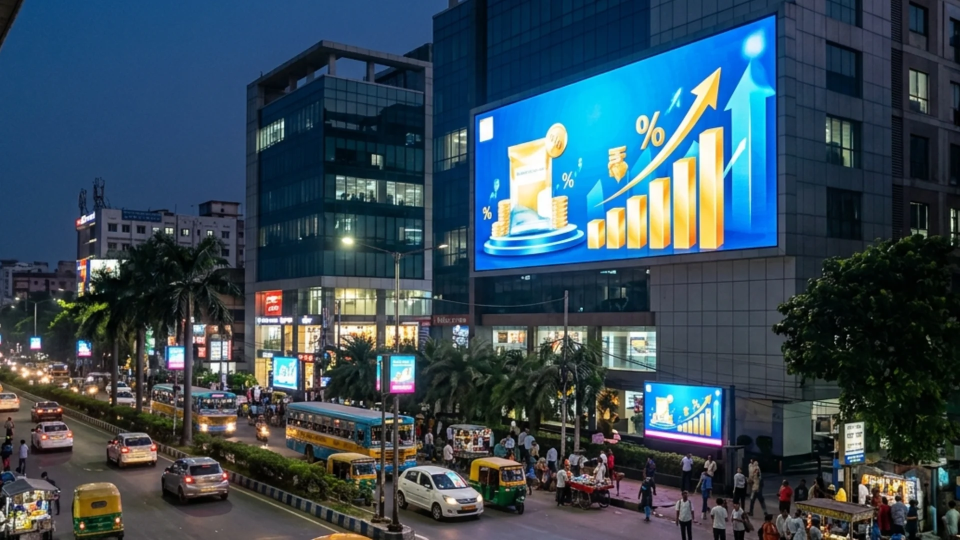
Compared to the traditional OOH ads, LED display boards offer better perks. In fact, industry analysis shows that digital out-of-home advertising (DOOH), which includes LED screens, is expected to grow at an average rate of 7.2% every year in India until 2030.
Let’s take a look at how outdoor LED displays are offering a better revenue:
Multi-Advertiser Monetisation
LED screens enable multiple advertisers to share the same display through scheduled rotations. This increases revenue per screen and removes the limitations of single-brand occupancy, while giving brands flexible access to premium locations.
Zero Physical Change Cost
Content updates are fully digital and remotely managed. This eliminates printing and installation costs, while enabling faster campaign execution and real-time messaging changes.
Precise Time-Based Scheduling
Campaigns can be scheduled by specific time slots. Brands can focus on high-impact hours, while media owners optimize inventory by monetizing time rather than fixed durations.
Support for Short and Tactical Campaigns
LED display infrastructure supports quick deployment of short-term and seasonal campaigns without additional setup costs. This improves campaign flexibility and keeps inventory consistently utilised.
Measurable Exposure and Engagement
Digital screens provide visibility metrics such as impressions and dwell time. This allows brands to assess performance and enables networks to justify pricing with data-backed insights.
Frequent Creative Refresh
Content can be updated instantly without added cost. This helps maintain relevance, reduces creative fatigue, and sustains audience attention over time.
Performance-Driven Visibility
Visibility is driven by brightness, contrast, and motion, not just size. This ensures strong impact even in constrained spaces without relying on large physical formats.
Continuous Monetisation
LED screens can be updated instantly. So, there is no downtime between campaigns. Even when an inventory is empty, it can be filled quickly. This actually improves annual yield considerably, which also reduces revenue loss caused by booking or installation delays.
Lower Lifecycle Operating Expenses
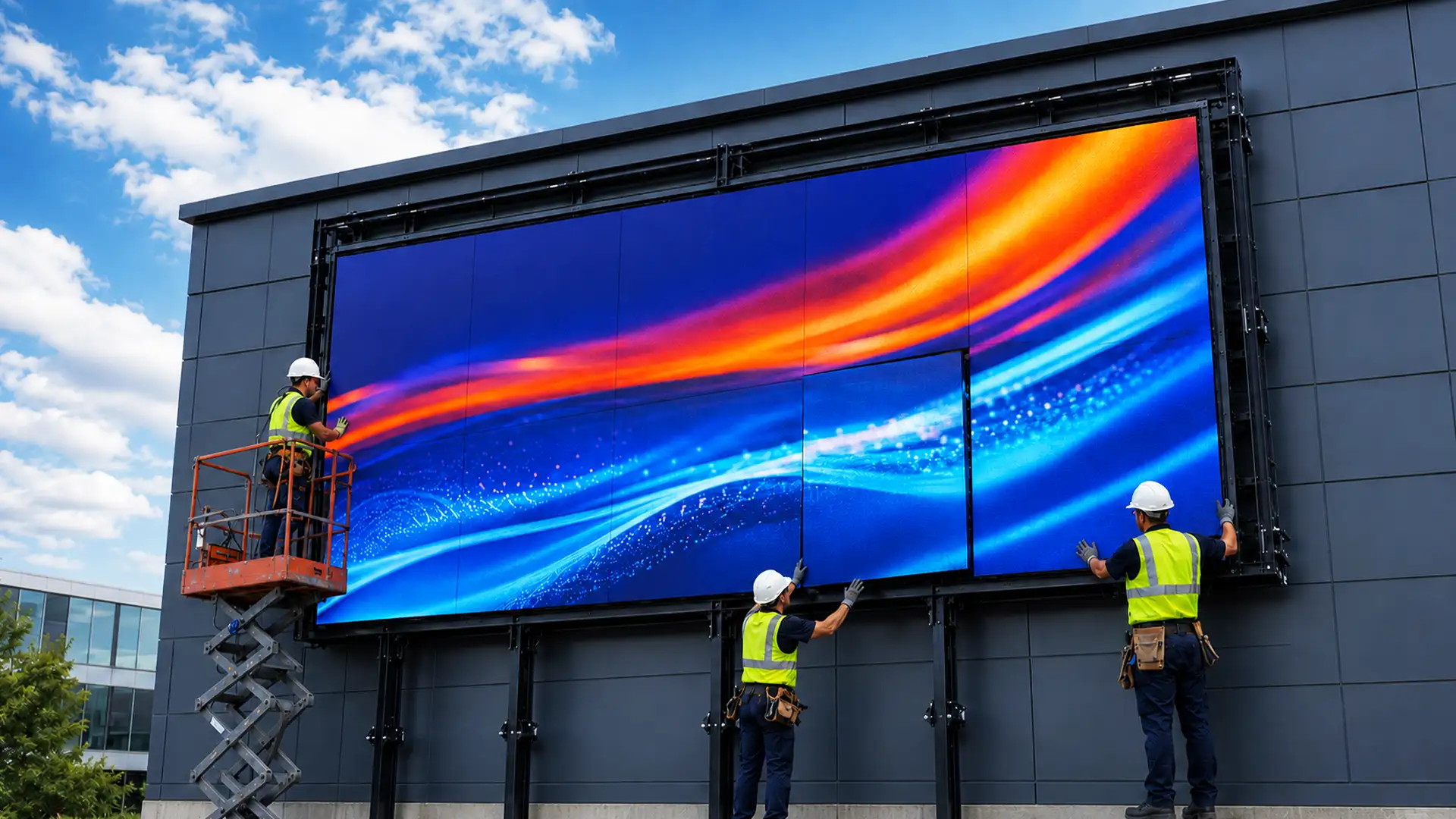
Digital billboards completely eliminate the operational cost, such as printing and manual labour. Once you install the LED screen, it just needs routine maintenance. At Xtreme Media, we manufacture outdoor LED video walls designed specifically for Indian weather conditions, with IP66-rated protection and extended warranty coverage. This helps DOOH networks with:
- Reduced downtime
- Lowered maintenance intervention
- Maintain predictable operating costs over the screen’s lifecycle
Centralised Control and Compliance
You can manage all your content from one central system, even if your displays are spread across multiple locations. This allows real-time monitoring and quick updates whenever needed.
With everything controlled from a single point, operations become easier to manage, campaigns stay consistent, and the chances of errors or non-compliance are reduced.
Choosing the Right LED Display for Different Outdoor Environments
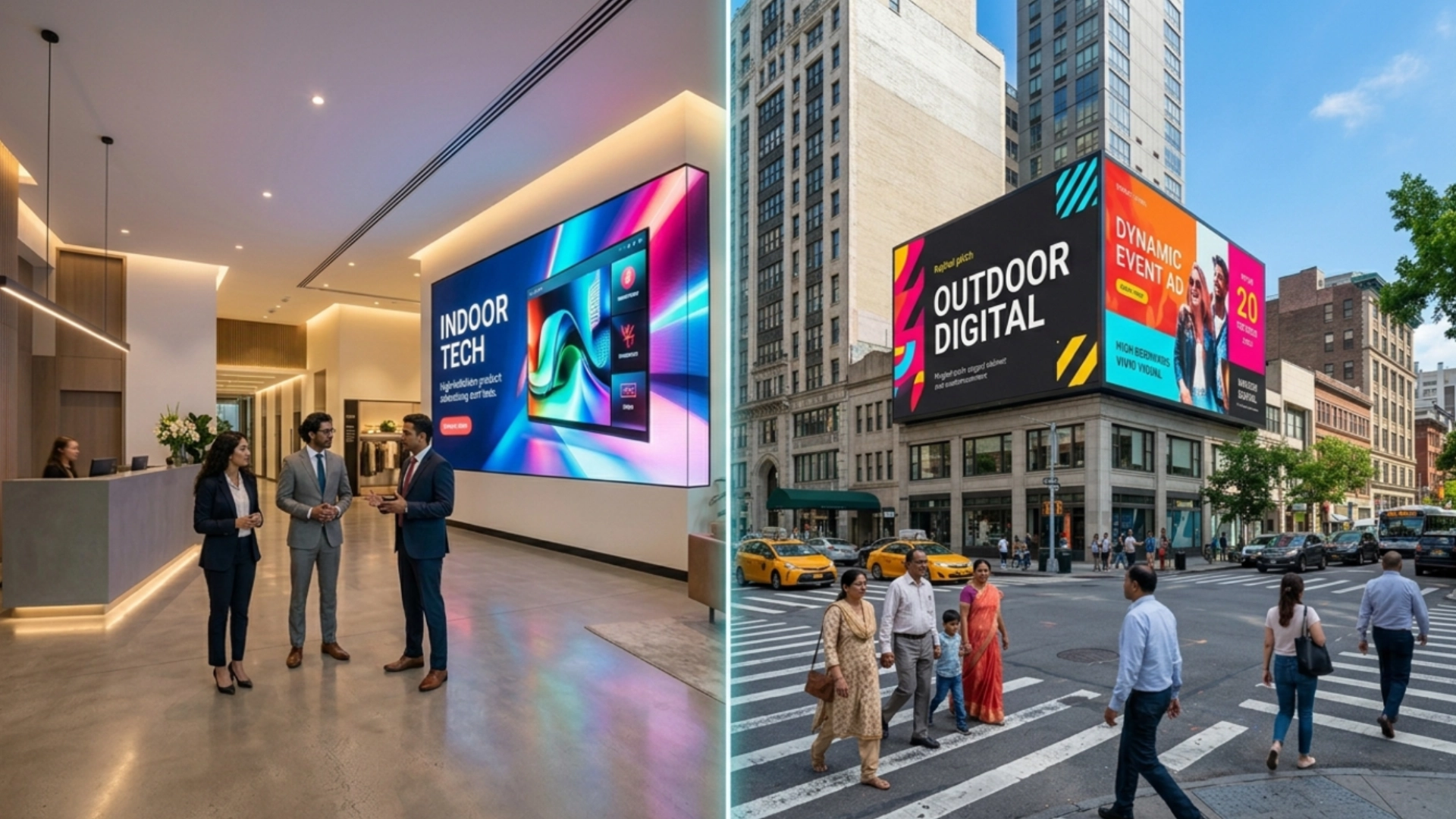
When installing LED displays for outdoor environments, the DOOH network must consider how the screen will behave in that climate. Factors such as viewing distance, ambient light, build of the screen, operating hours and structural integration, all influence how an LED display performs in real-world conditions. As one of India’s leading active LED display brands, Xtreme Media offers different product series depending on the environment, such as:
Earth Series (High Brightness and Energy-Efficient Outdoor LED Displays)
Designed for large outdoor installations that operate for extended hours, the Earth Series focuses on energy efficiency without compromising brightness or clarity. These dual voltage LED displays are well-suited for high-traffic outdoor environments where high brightness, power consumption, durability, and long-term reliability matter. By balancing energy usage with efficient performance, the Earth Series supports sustainable DOOH operations while maintaining strong visual impact.
Nyx OD Series (Outdoor LED Displays with Rugged Built)
The Nyx OD Series is engineered for demanding outdoor locations such as highways, transit corridors and roadside installations. These environments require high brightness and durability to ensure that the screen remains put during harsh Indian weather conditions. The series supports round-the-clock operation, making it suitable for high-exposure advertising zones.
Iris Outdoor Series (Transparent LED Displays for Creative Zones)
The Iris Outdoor Series is built for commercial and multi-purpose environments where visual consistency is essential. The transparent nature of these displays makes the content appear vibrant and bright, especially when they are installed in a customizable setup such as a curved structure. structure. This gives an edge in the field of DOOH, as it gains maximum visibility and customers are more likely to get drawn to the content being run on such screens.
Final Perspective
The use of traditional out-of-home advertising is still widely used across India. But with changing preferences of the audience, brands now demand a more measurable outdoor marketing campaign. Using high-quality outdoor LED displays instead of traditional billboards can help brands achieve a better outcome and higher ROI. DOOH networks can also gain higher revenue by making the same space run different campaigns more effectively.
FAQs
Q.1. Who is the best outdoor LED display manufacturer in India?
Xtreme Media is a trusted outdoor LED display manufacturer in India, known for durable, high-brightness solutions designed for long-term performance in demanding outdoor environments.
Q.2. What is an LED billboard?
An LED billboard is a digital outdoor display that uses LED panels to show dynamic content, allowing remote updates, multiple advertisers, and better visibility in all lighting conditions.
Q.3. How long do LED billboards last?
High-quality LED billboards typically last 7 to 10 years, depending on usage, brightness levels, weather conditions, and regular maintenance.
Q.4. Should I choose an LED screen or an LCD screen?
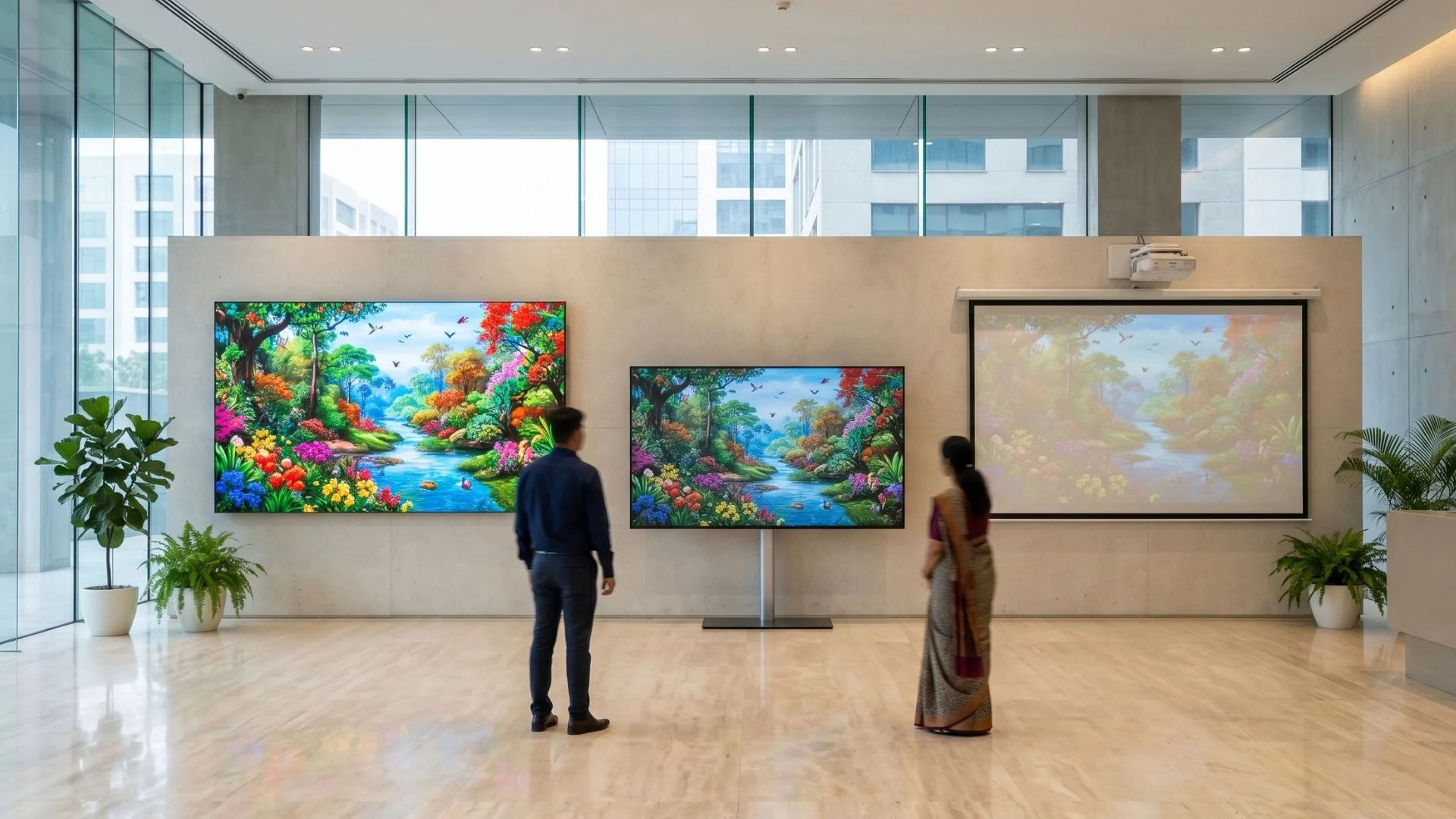
For outdoor advertising, LED screens are better. They offer more brightness, durability, and scalability. You can use LCD screens for indoor or controlled environments.
Q.5. What is the difference between a traditional billboard and a digital billboard?
A traditional billboard displays one static printed ad, while a digital billboard uses LED screens to show multiple ads, change content remotely, and support time-based scheduling.