What is an LED Display? A Practical Guide for Indian Businesses
Published on: June 9, 2026
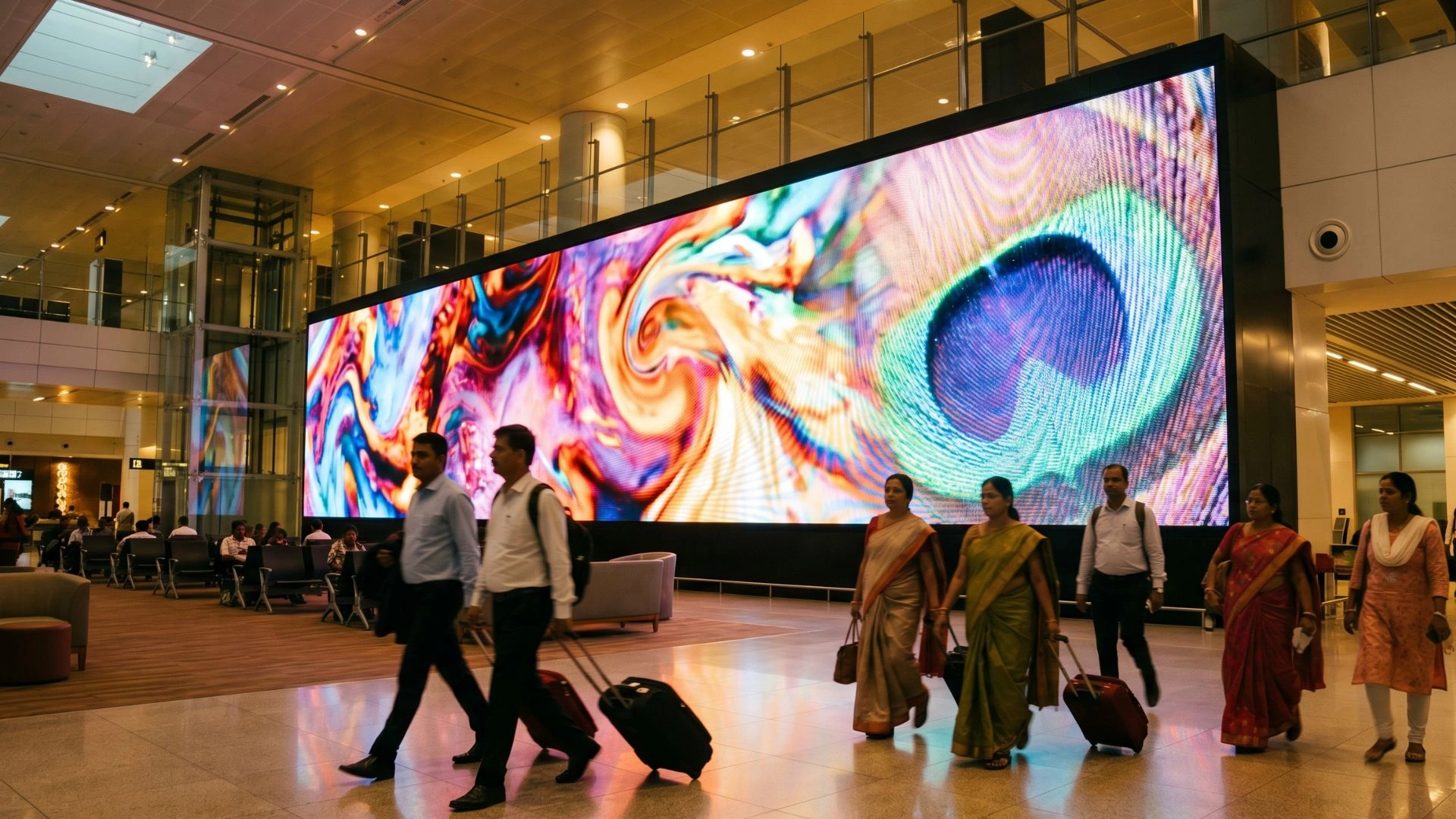
Walk into an airport in Mumbai, Delhi or Bengaluru. Look up. That giant bright digital wall playing ads is most likely an LED display. It does not need a projector. It does not wash out in sunlight. It just works. And it keeps working for years.
So what exactly is an active LED display, and why is every modern brand in India moving to it? Let us break it down in simple words. No jargon. Just clear examples.
Quick answer:
An LED display is made up of thousands of tiny LED lights. Each one acts as an individual pixel and produces its own light — which is why the screen does not depend on a backlight or projector. It remains bright outdoors, delivers deeper contrast indoors, and can operate 24x7 without the dullness or visibility issues seen in traditional display systems like TVs or projectors.
LED Display: Explained in the Easy Way
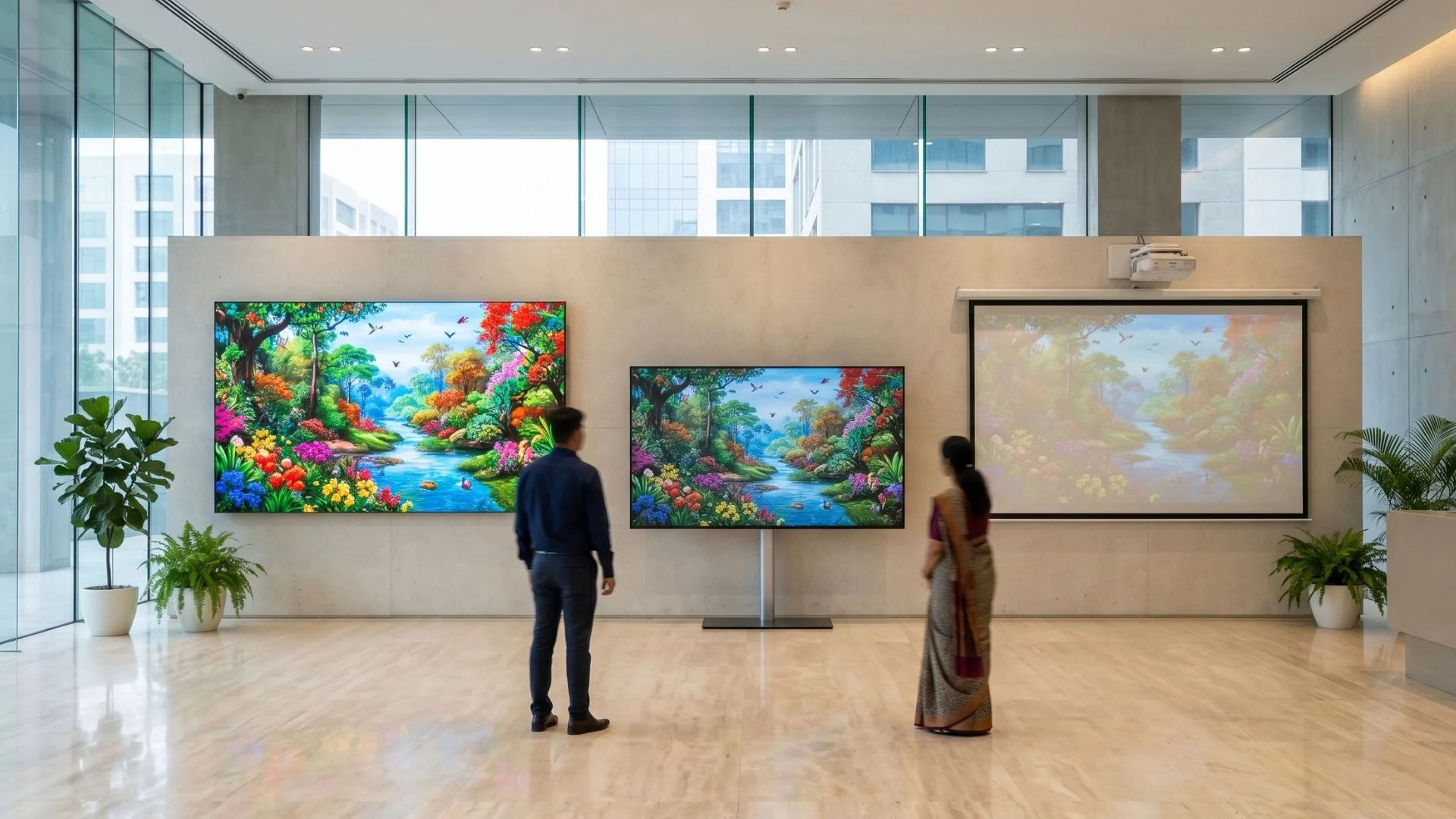
Consider a normal TV at your home. It works using a light placed behind the screen. The image you see is created as that light passes through a layer of liquid crystals. In simple terms, the screen is shaping light rather than producing it. That's why it's called a passive display.
An active LED display works differently. Every pixel lights up on its own. There is no backlight. There is no curtain of LCD between you and the light. You see the LED lamps directly. This one shift changes everything — brightness, contrast, viewing angle, durability and total cost of ownership.
How an LED Display Actually Works
3 layers of LED Screens you should know
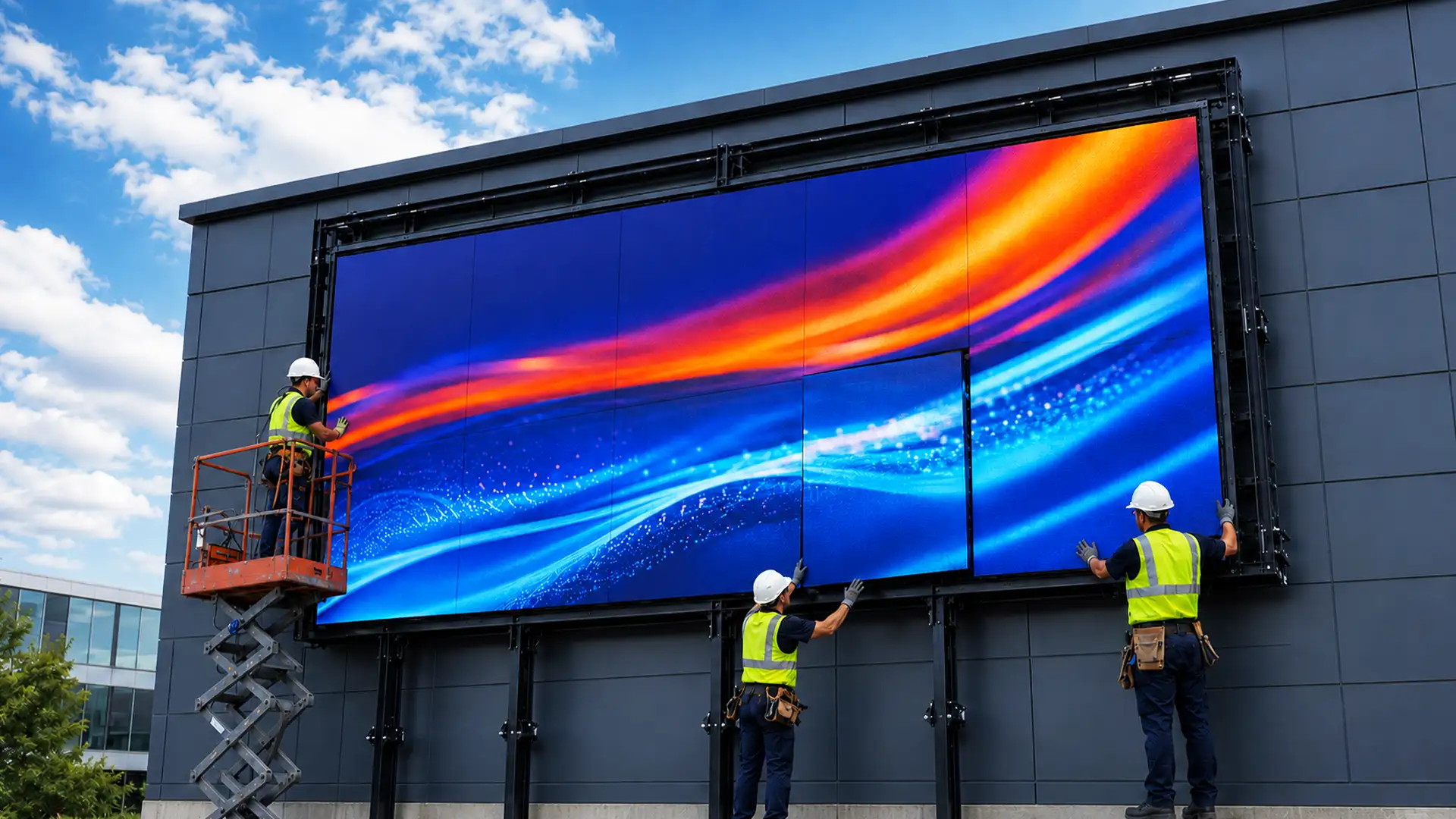
- The LED module: The LED module is the basic structure on which any active LED display is made. Each module is a compact tile of red, green, and blue LEDs that connect with one another to build a screen in whatever size your project demands.
- The cabinet: A tough frame that holds the modules. Indoor cabinets are light. Outdoor cabinets are IP-rated for rain and dust.
- The processor: The brain. It splits your content — a video, a live feed, a data dashboard — and sends each pixel its exact instruction every millisecond.
At Xtreme Media, we design each of these three layers in India.
Why an LED Display Board Has Replaced Traditional Screens in India
Brightness you can feel
A normal TV gives you about 300–400 nits of brightness. But when you step outside, that's just not enough. An outdoor LED video wall pushes it up to around 5,000 – 10,000 nits, so your content stays clear and easy to see even under direct sunlight. That is more than 15x brighter.
Seamless size at any scale
Need a large format screen behind a stage? Or a curved LED wall wrapping a reception area? Customizable modules make it possible. You are not stuck with a fixed TV size. You build the screen you want. Flat, curved, concave, floor, ceiling — all from the same system.
Runs 24x7 without burn-in
A banking dashboard. A menu board at a QSR. A stock ticker at a broker's office. These screens cannot switch off. LED displays handle 100,000+ hours of life — that is over 11 years of round-the-clock use. TVs and monitors are not built for that load.
LED Display vs LED Screen Display vs LCD Panel — A Quick Table in Plain Words
| What matters to you | Active LED display | LCD panel / TV |
|---|---|---|
| Brightness outdoors | Excellent (5,000+ nits) | Poor — washes out |
| Size flexibility | Build any size or shape | Limited to standard diagonals |
| Life span | 100,000+ hours | 30,000–50,000 hours |
| Viewing angle | Near 180° | Drops after 60° |
Where Indian Brands Use LED Displays
Here are real examples from projects we have delivered across India. No fluff — just where this technology earns its place.
- Airports: The arrival and departure boards at major Indian airports now run on LED, not LCD. Reason: they run 24x7 in challenging weather conditions.
- Retail flagship stores: A Gurgaon luxury mall anchor store uses a 12 x 4-meter curved LED display to replace the old, printed hoarding. The content changes every two hours.
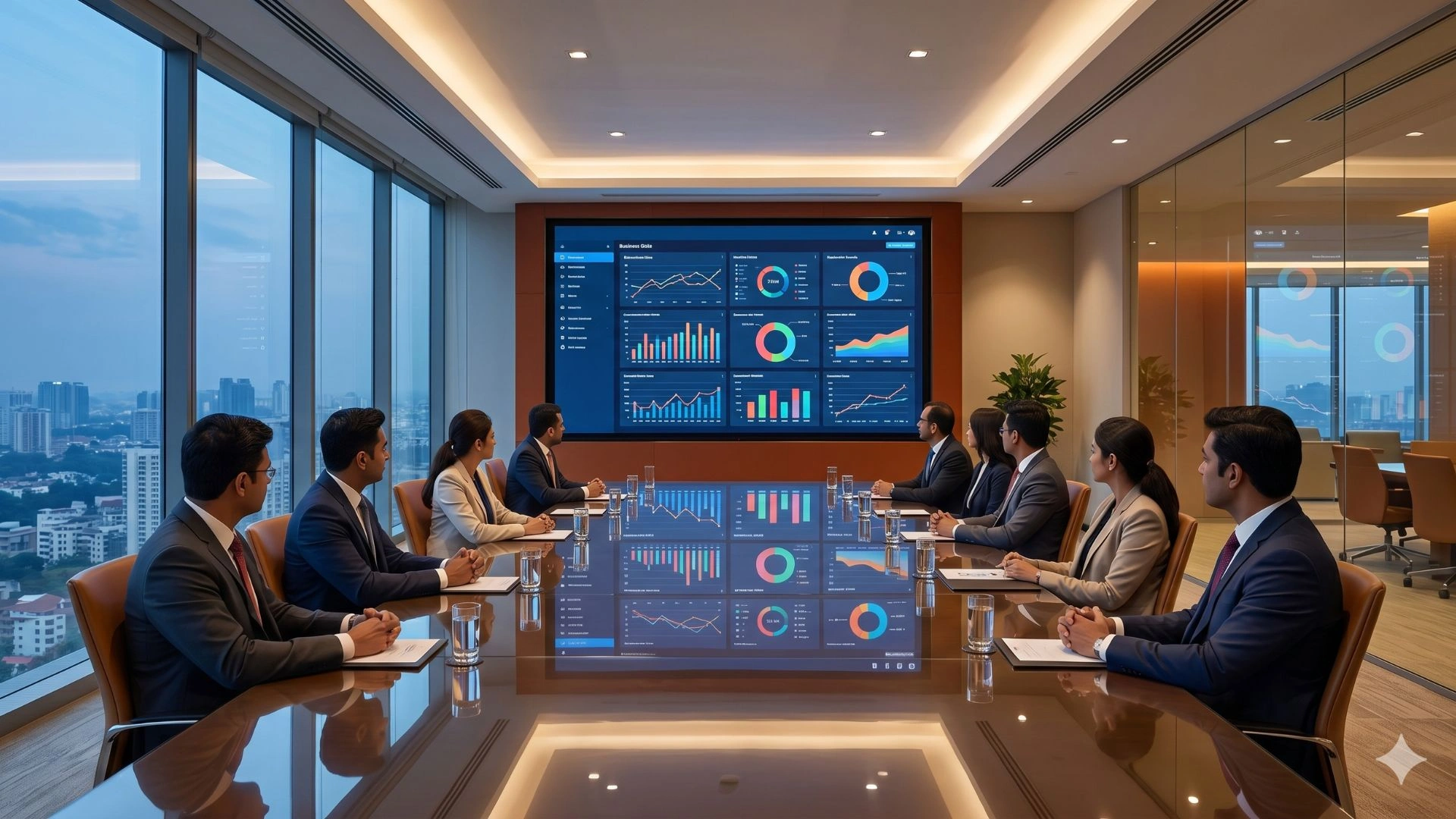
- Control rooms: Metro rail, power utilities and traffic command centres need deep blacks and zero bezel gaps. LED displays give both.
- Stadiums and IPL venues:Outdoor perimeter ribbons and centre-hung cubes are LED. Nothing else survives the direct sunlight of a stadium at 2 pm.
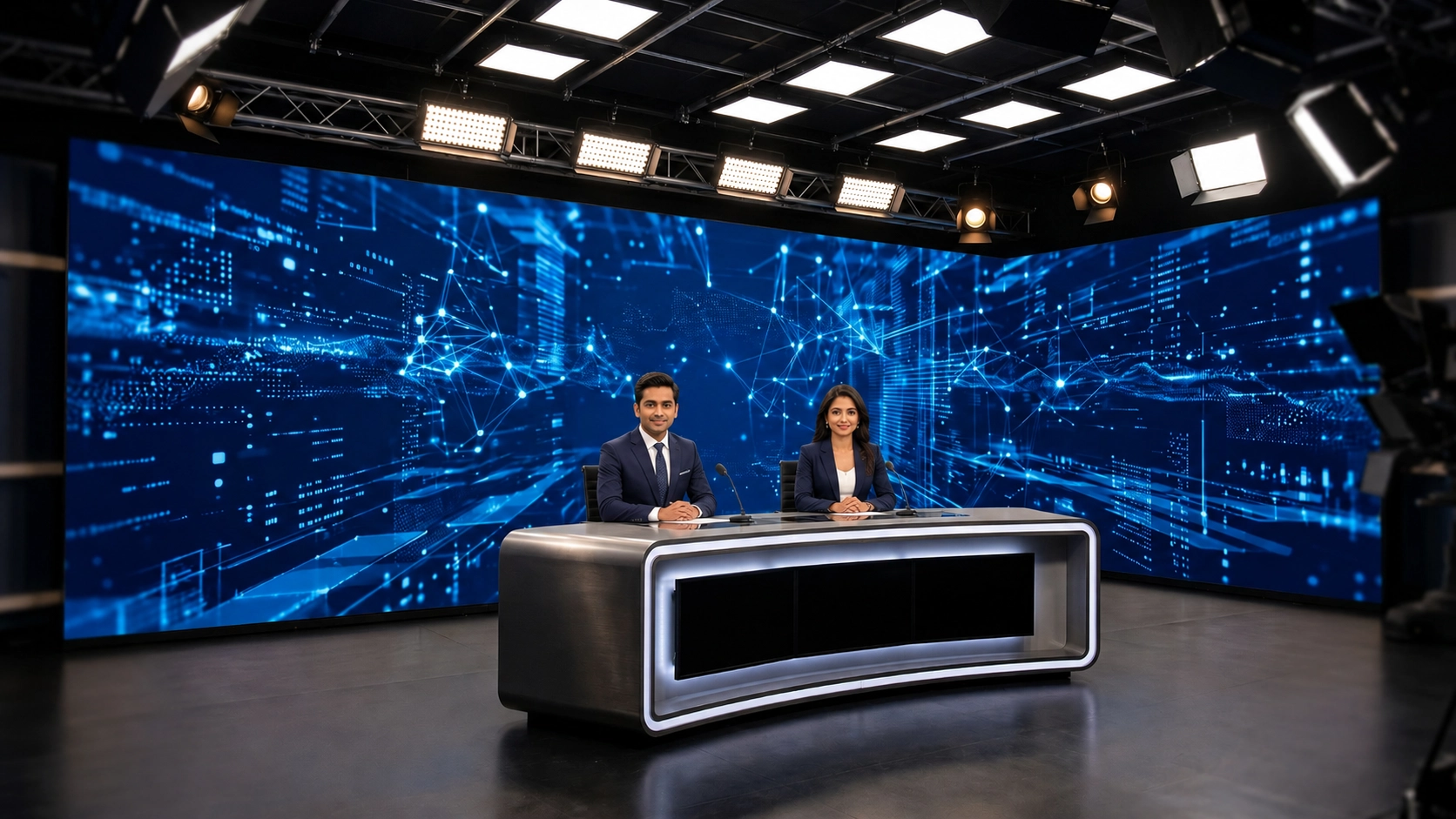
- Broadcast studios: News channels and virtual production stages in Mumbai use fine-pitch and indoor active LED displays as the backdrop. Cameras read the colour beautifully.
How to Choose an LED Display — 4 Questions to Ask Yourself
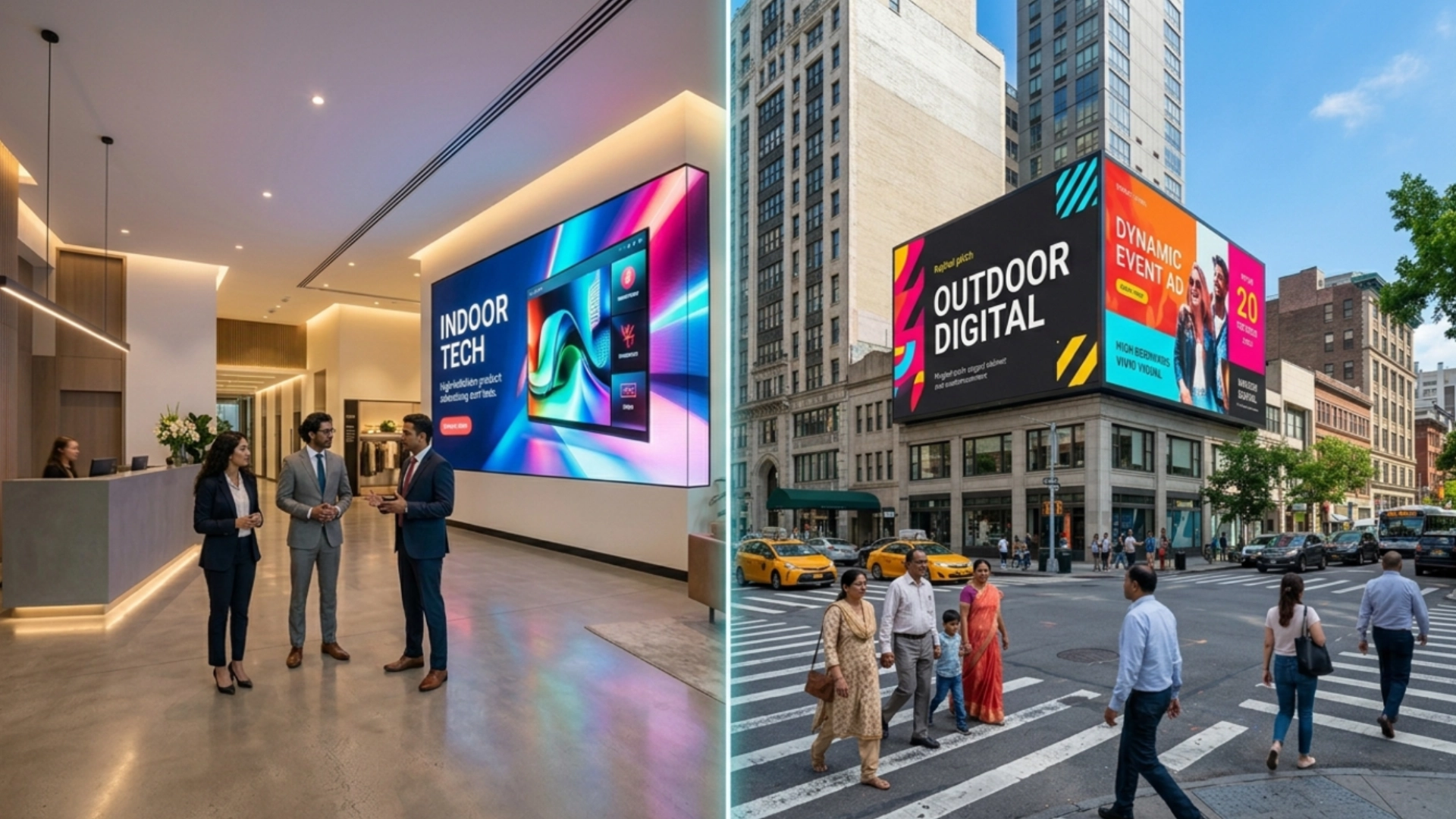
- Where will it sit? Indoor or outdoor. Viewing distance in meters. This decides the right pixel pitch for your display.
- What will it show? Text-heavy menu, full HD video, or a live camera feed. This decides refresh rate and colour depth.
- How long will it run? A few hours a day, or 24x7.
- Who will service it? Ask for an OEM with a local India team.
A good partner will walk a site visit with you before they quote. At Xtreme Media, our project team visits within 72 hours across all major Indian cities.
The Made-in-India Edge
We are India's largest active LED display brand by installed volume. Our headquarters is in Mumbai. Our R&D happens in India. Our service teams live in the cities you operate in. For projects outside and in India, we deliver under our manufacturing brand LedX Technology. Same R&D, same warranty standards, local deployment.
The Bottom Line
An LED display is not a fancier TV. It is a different category. It is brighter, lasts longer, scales to any size and stays sharp in every light. If your brand needs a screen that works on day 1 and still works on day 1,500, LED display is the answer.
Planning a LED screen for a store, office, stadium or studio? Talk to our team. We will run the numbers, the viewing distance, the brightness and the ROI before we ever talk price.
FAQs
Q.1. What is an LED display?
An LED display is a screen where every pixel is a tiny LED that is self illuminating. There is no backlight. It is brighter, lasts longer and can be built in any size — unlike a TV or an LCD panel.
Q.2. Is an active LED display the same as an LED TV?
No. An LED TV still uses an LCD layer in front of an LED backlight. An active LED display shows the LEDs directly, with no LCD. That is why LED video walls look so much brighter and sharper up close.
Q.3. How long does an LED display last?
Good quality LED displays last 100,000+ hours. That is roughly 11 years of 24x7 use. Xtreme Media's Platina series carries a 7-year warranty — the longest in the Indian industry.
Q.4. Where are LED displays used in India?
At airports, stadiums, metro stations, outdoors, retail flagship stores, broadcast studios, auditoriums, control rooms and large corporate lobbies — anywhere a bright, bold, always-on screen is needed.
Q.5. How do I choose the right LED display for my business?
Start with the viewing distance as per the application space, type of lighting and daily run hours. This helps in deciding the pixel pitch, brightness and build grade you need. An honest LED display OEM will visit your site before they quote.