Transparent LED Displays for Retail & Corporate Spaces: Complete Buyer’s Guide
Published on: May 8, 2026
Transparent LED screens are being widely used in retail and corporate spaces. These displays look modern and sleek, adding an aesthetic appeal to these spaces where attracting attention matters the most. Installing transparent LED displays allows brands to communicate effectively without blocking light, sightlines, or design intent. However, choosing the right model can be challenging.
As one of India’s largest active LED display brands, we’ve seen many projects fail due to incorrect technology choices, misaligned specifications, poor installation planning, and lack of focus on long-term performance. So, here is a guide tailored for you, breaking down what you need to know before investing in transparent LED displays for retail and corporate environments:
Understanding Transparent LED Displays in Commercial Spaces
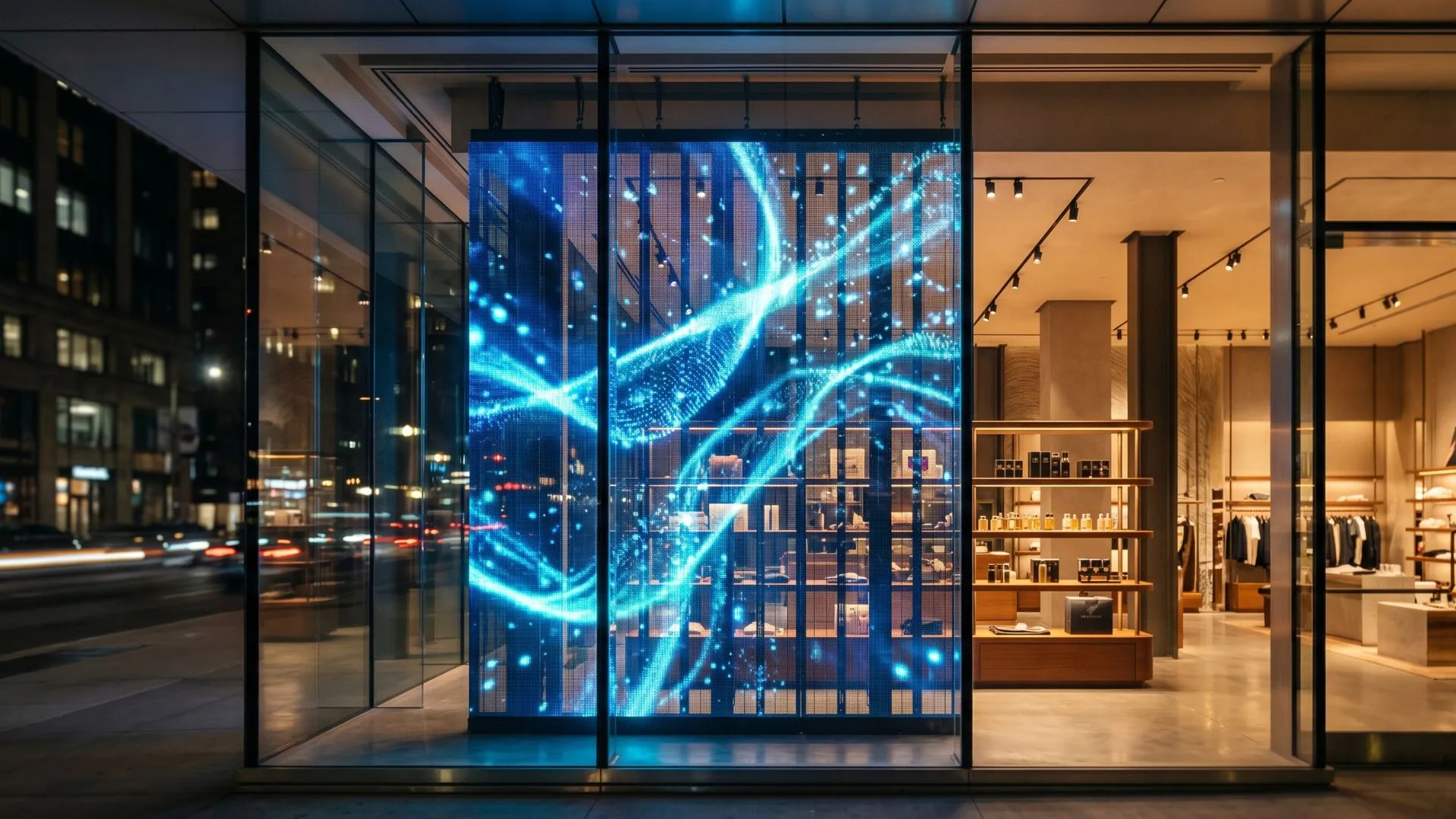
A transparent LED display is built using strip-based LED modules with spaced pixel layouts that allow light to pass through the screen. These are a bit different from conventional LED displays, as they do not create a solid visual barrier. Instead, they overlay digital content onto glass façades, windows, or partitions.
Transparent LED screens are a great addition to retail brands. Your consumers can still see your products, mannequins, or interiors even when content is playing. For corporate spaces, these displays make the space look bigger while subtly promoting their brand. Due to their larger pixel pitch, these displays perform best at medium to long viewing distances.
Technical Specifications of LED Displays You Should Know Before Investing
Before purchasing any LED screen for commercial usage, it is important to familiarize yourself with the technical specifications, such as:
Transparency rate and its visual impact
The transparency rate explains how much natural light and background visibility pass through the display. When a display has a higher transparency percentage, it can preserve daylight and keep interiors visually open. This makes them ideal for glass façades and storefronts.
On the other hand, higher transparency comes with a larger pixel pitch, which lowers pixel density and makes the content appear less solid at close viewing distances. For instance, our Iris Indoor Series perfectly balances both transparency and sharpness.
Pixel pitch and viewing distance
Pixel pitch is the distance between the centres of two adjacent pixels on a digital display. It controls how sharp the content looks and also where the screen should be placed so viewers can see it clearly.
In retail environments, people usually view displays while walking past stores or from across corridors. At these distances, a medium pixel pitch is enough, so higher-resolution displays are not necessary.
But for corporate areas, the displays are usually installed in lobbies, where people stand or sit closer to the screen. They spend more time looking at the screen, reading text, or watching presentations, so finer pixel pitches make sense.
Also Read: Correlation between pixel pitch, screen size and screen resolution
Brightness levels for indoor and outdoor conditions
Brightness influences how the screen looks when there is sunlight, indoor lighting, or reflections around it. It is critical for transparent LED displays because light passes through the screen as well as reflects off it.
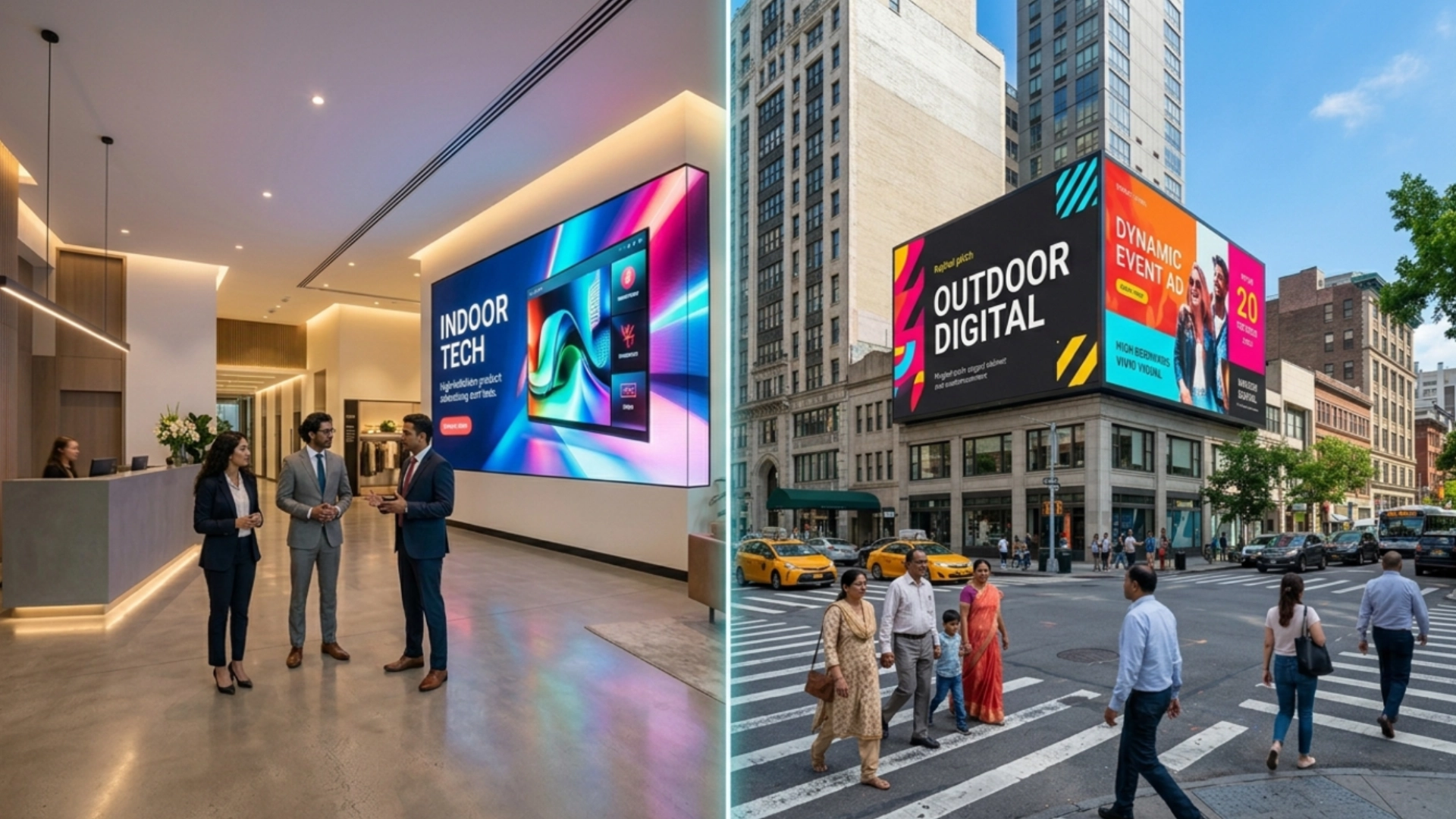
If you are planning to install the transparent LED displays outdoors or at a shopfront, you need high brightness. Otherwise, the sunlight will make the text, images, and videos hard to read. But for indoor installation, there is no such issue. Rather high brightness can cause glare, eye strain, and discomfort.
Our outdoor LED video wall solutions support brightness calibration. Therefore, displays can adapt to changing lighting conditions throughout the day. This ensures visibility when needed without unnecessary power consumption or visual fatigue.
Refresh rate, colour depth, and visual stability
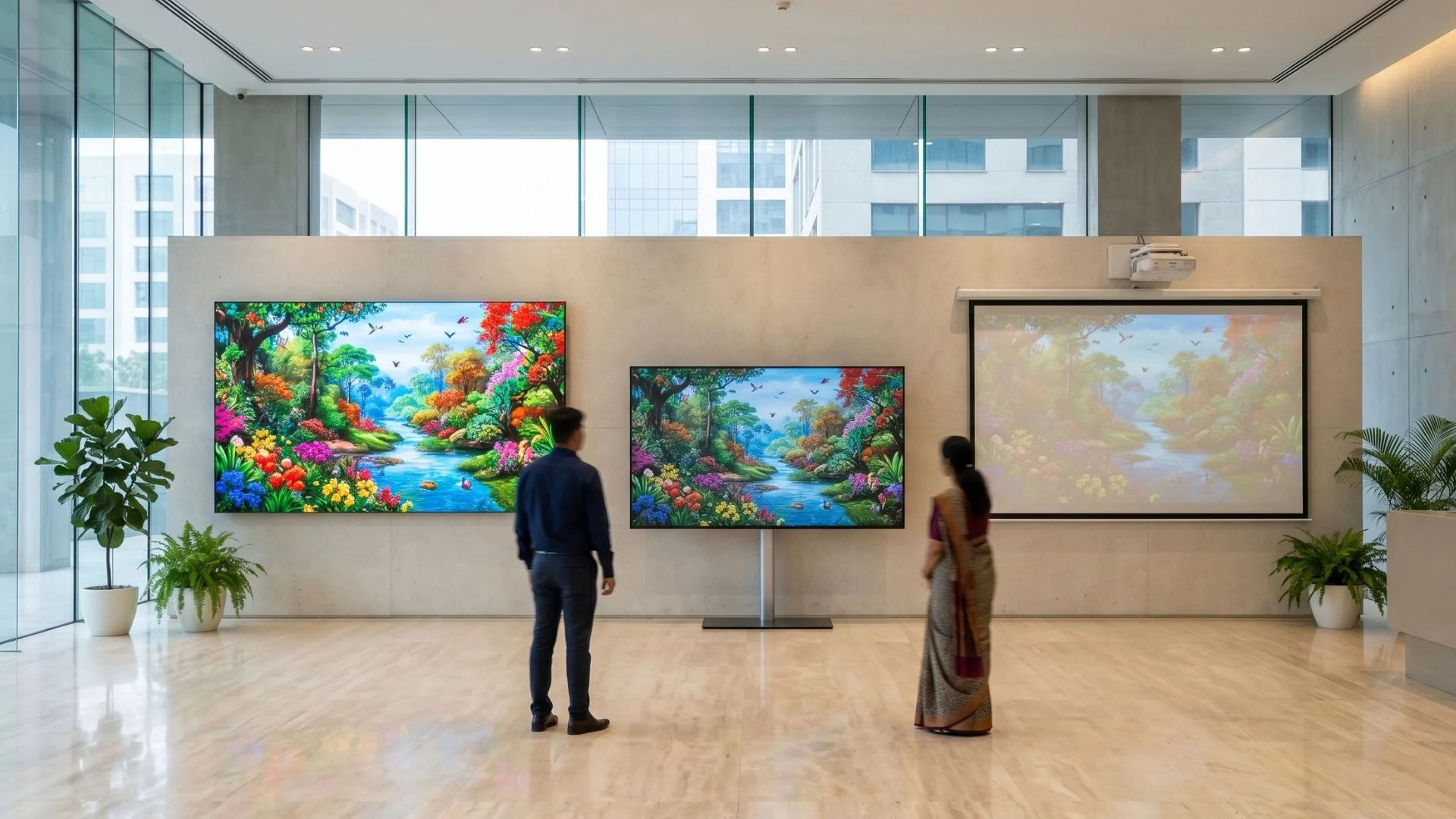
Refresh rate is responsible for how smooth the screen’s content appears to viewers and on camera. If the refresh rate is low, it can cause flickering, scan lines, or moiré, especially when displays are photographed or recorded.
Since retail LED displays are often recorded or photographed for social media and campaigns, it is better to make sure the display has a high refresh rate. Corporate spaces should also choose a display with a high refresh rate to make the content look more polished, professional during events, presentations, or media coverage.
At Xtreme Media, we treat colour depth and grayscale performance as core quality markers.
Power consumption and energy efficiency
Transparent LED displays often operate for long hours. So, brands must consider how much power the LED display is consuming. If it is too high, it might increase operating expenses.
Ingress protection (IP rating) and environmental tolerance
When installing an outdoor transparent LED Display, you need a model that can withstand dust, moisture, and environmental exposure. So, it is essential to know the correct IP rating, as it can lead to sudden failures. Our outdoor transparent LED solutions are available with IP 65 ratings, whereas indoor solutions come with IP30 ratings.
Viewing angle and content legibility
Since in retail areas, people usually see the screen while moving, a wide viewing angle is more suitable. This makes sure the screen is visible in different approach paths, corridors, or street angles. Choosing the right viewing angle is also beneficial for corporate spaces when installed in large lobbies and open areas.
Control systems and content management
The control system is responsible for what appears on the display, when it appears, and how it looks. It controls video playback, switches content, adjusts brightness, and ensures the screen runs smoothly throughout the day. Hence, it should be simple and easy, so even non-technical people can handle it.
Installation Considerations That Influence Performance
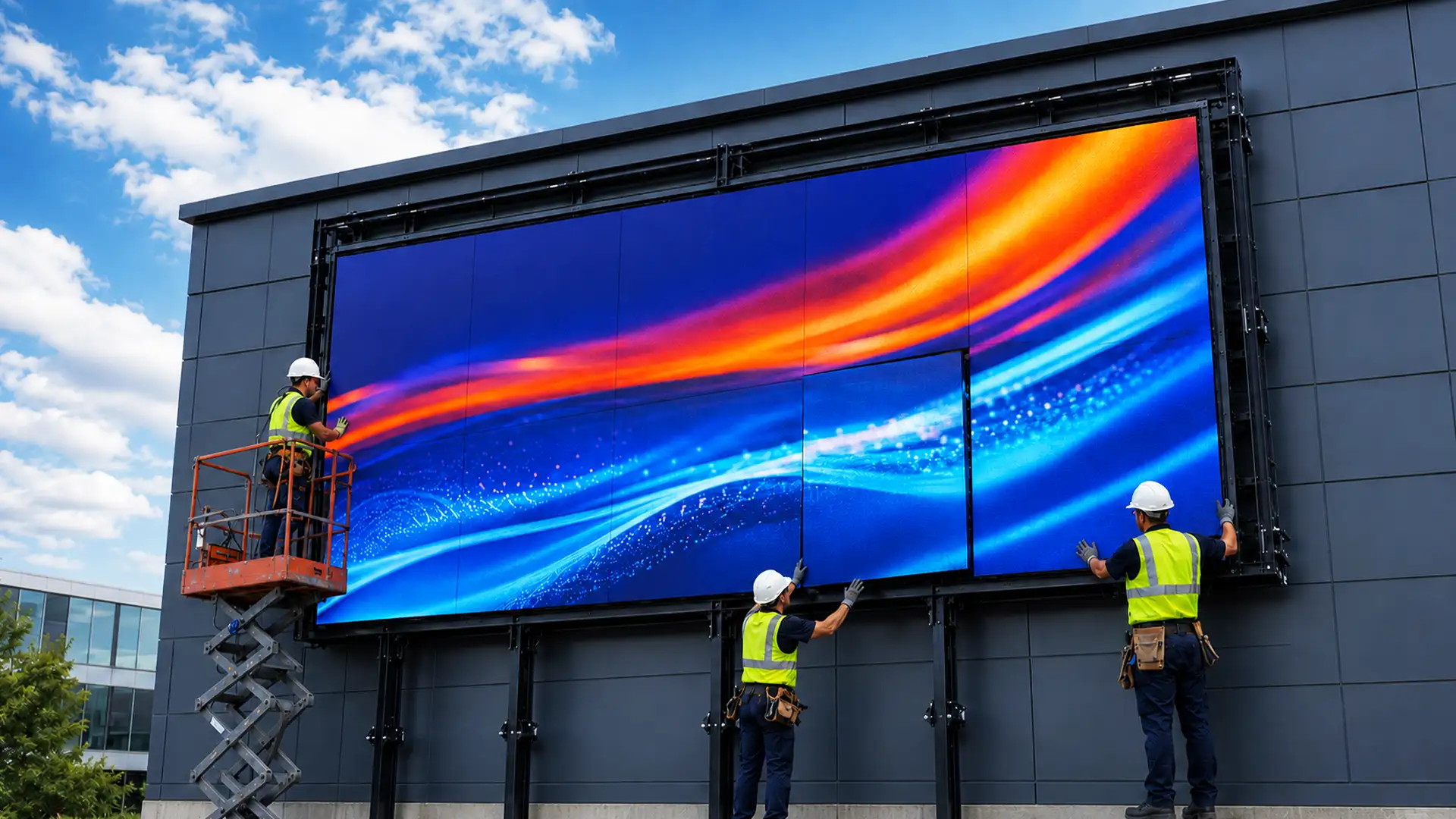
While technical specifications play a major role in the performance of a transparent LED screen, proper installation is also equally important.
Structural load and mounting methods
Although transparent LED displays are lighter than traditional LED displays, they can still be challenging to install. If the weight per square meter (kg/m²) is high, it can put stress on the structure, especially the glass façades, mullions, and supporting frames.
Cabinet design
The cabinet is the physical frame that holds the LED modules together. If it is bulky or poorly designed, the display can look intrusive and look aesthetically shabby. Slim cabinets and precisely engineered modules are ideal for transparent LED displays installed outdoors.
Service access
Maintenance and servicing are essential to increase the longevity of an LED screen. But if the service access is too complex, it can be detrimental to high-traffic retail and corporate areas that cannot afford prolonged downtime. Front and rear service access simplifies maintenance and allows repairs without dismantling glass panels or disrupting daily operations.
Our Iris series is built with serviceability in mind, supporting faster maintenance and lower total cost of ownership.
Power distribution and cable management
No one wants to see the datable cables or cable routing showing in a premium retail or corporate space. So, the placement of these should be hidden properly while also making sure it has easy access for servicing.
Cost Factors and Budget Planning
When you are planning to purchase LED displays for retail stores like malls or supermarkets and corporate space, you are probably aware that it is going to be an expensive investment. However, when you plan better, it can help you cut down unnecessary costs and gain a better value.
Let’s first understand:
What influences the overall investment
The upfront cost of a transparent LED display depends on a number of factors, such as:
- Pixel pitch,
- Size,
- Brightness requirements,
- Installation complexity,
- Control systems,
- Software.
Long-term operational value
As we mentioned previously, you should always consider the long-term value of an LED screen. While transparent LED displays require higher upfront investment than static signage, they reduce recurring costs in terms of installation, and frequent physical updates.
Choosing the Right Transparent LED Display Manufacturer
Now that you have an idea of the specification, installation and budget, let’s talk about how you can choose a reliable, transparent LED display manufacturer:
Manufacturing quality
The longevity and performance of an LED display depend on the quality of the parts. For instance, LED chips, PCB quality, and module alignment directly affect transparency, brightness uniformity, and lifespan. When you work with an experienced manufacturer like Xtreme Media, we make sure the display is offering a consistent performance.
Project experience and support
While brochures hold crucial information, when you check previous projects of a manufacturer, it will give you more insights. Check whether they have any experience in retail storefronts, malls, corporate offices, and large façades. At Xtreme Media, we design and manufacture LED displays, delivering end-to-end solutions with application-based engineering, system integration, and on-site installation across projects in India.
Integration with broader digital ecosystems
In most spaces, the display connects with tools like a content management system (CMS) to update visuals. Schedulers usually use the systems to change messages by time or day, or use the sensors to adjust brightness based on sunlight or foot traffic. If you already have an existing system, then you need to consider whether the display supports the CMS.
Wrap Up
Transparent LED displays are the modern way of advertising, branding, and storytelling for retail and corporate brands. Thus, it is essential to choose the right one that leaves a deep impression on your audience. So, when choosing an LED display screen, consider clarity, performance, installation quality, and long-term reliability. Contact us to find the right LED display.
FAQs About Transparent LED Screens
Q.1. Where are transparent LED displays commonly used in retail and corporate spaces?
Transparent LED displays are commonly installed on glass façades, storefront windows, mall atriums, corporate lobbies, and office partitions, where brands want digital communication without blocking daylight, visibility, or architectural openness.
Q.2. How do transparent LED displays differ from traditional LED video walls?
It completely depends upon the buyers’ requirements since both types of LED displays have different functional capabilities. Transparent LED displays use spaced modules that allow light and visibility to pass through, making them suitable for glass-based environments without creating a solid visual barrier.
Q.3. What pixel pitch is ideal for retail and corporate transparent LED displays?
Retail environments usually work well with medium pixel pitches due to longer viewing distances, while corporate spaces such as lobbies benefit from finer pixel pitches where viewers stand closer and engage with content for longer durations.
Q.4. How to install a transparent LED screen?
Mount the frame on the structure, attach LED modules, connect power and data cables, then configure the control system for content playback.
Q.5. What is the lifespan of a transparent LED screen?
A transparent LED screen typically lasts 80,000 to 100,000 hours, depending on usage, environment, and maintenance. With proper care, it can perform efficiently for 8–10 years or more.
Q.6. How important is the control system in a transparent LED display setup?
The control system manages content scheduling, playback, brightness adjustment, and overall screen performance. A user-friendly system ensures smooth daily operations and allows non-technical teams to update content without operational complexity.
Q.7. What factors should buyers consider beyond the initial cost?
Buyers should evaluate long-term operational value, including energy consumption, maintenance ease, warranty coverage, spare-part availability, and manufacturer support, as these factors significantly influence performance consistency and total ownership cost over time.