What Does IP Rating Mean in LED Displays and Why Is It Important?
Published on: September 2, 2026
In the evolving landscape of digital display technology, performance is often measured through visible metrics such as resolution, brightness, and color fidelity. Yet, these parameters alone do not determine the true reliability of an LED display. The conditions in which a screen operates such as exposure to dust, moisture, temperature variation, and continuous usage, play an equally decisive role in shaping its longevity and stability.
This is where the concept of LED display IP rating becomes fundamentally important. Rather than being a secondary technical detail, it acts as a structural safeguard that defines how well a display can withstand environmental stress, specially in outdoor LED displays.
In this blog, we explain what IP rating means in LED displays, how it works, and why it matters in real-world use.
What Is IP Rating in LED Displays?
The Ingress Protection (IP) rating is an international standard that defines how effectively an electrical enclosure is sealed against dust, solid objects, and moisture. In LED displays, this rating helps determine how well the panel can handle real-world environmental exposure.
An IP rating is expressed using two digits, and each one represents a specific type of protection.
The First Digit (Solids)
This indicates the level of protection against solid objects, ranging from accidental contact such as fingers or tools to fine dust particles. A higher value represents stronger protection. For example, a rating of “6” means the enclosure is completely dust-tight, preventing any particle ingress.
The Second Digit (Liquids)
This represents the waterproof rating of the LED screen, that is, resistance to moisture and water exposure. The scale ranges from basic protection against light drips to resistance against high-pressure water jets or even continuous exposure in harsh outdoor conditions.
For instance, an IP66-rated display is fully sealed against dust and can handle powerful water jets from any direction. On the other hand, a lower rating like IP20 is suitable for indoor environments where exposure to moisture is minimal and the focus is mainly on basic physical protection.
Why IP Rating Matters in LED Display Installations
Once the concept of LED display IP rating is understood, the next step is to look at its impact on actual usage. The relevance of this rating becomes clear only when a display is exposed to its working environment over time.
The primary role of IP protection is to maintain internal stability. LED displays rely on consistent electrical performance and controlled thermal conditions. When external elements interfere—whether through fine dust entering the cabinet or moisture affecting internal circuits—the result is not always immediate failure, but gradual degradation. This often appears as inconsistent brightness, color shifts, or reduced module lifespan.
Another critical aspect is operational continuity. In commercial LED screen installations such as advertising screens or event displays, even minor disruptions can lead to downtime and revenue loss. A display with appropriate environmental protection is less likely to require frequent servicing, which improves uptime and reliability.
From a cost perspective, the LED display IP rating influences more than just the purchase decision. A lower-rated display may seem sufficient initially, but if it does not align with the environment, it can lead to higher maintenance costs, repeated repairs, and reduced service life. In contrast, a high IP-rated LED display maintains performance consistency and reduces the need for intervention.
How to Choose the Right IP Rating for Different Applications
The IP rating of the digital screen you choose should depend on where the LED display will actually operate. There’s no one-size-fits-all number here. What works perfectly in one environment may fail in another.
Indoor Environments
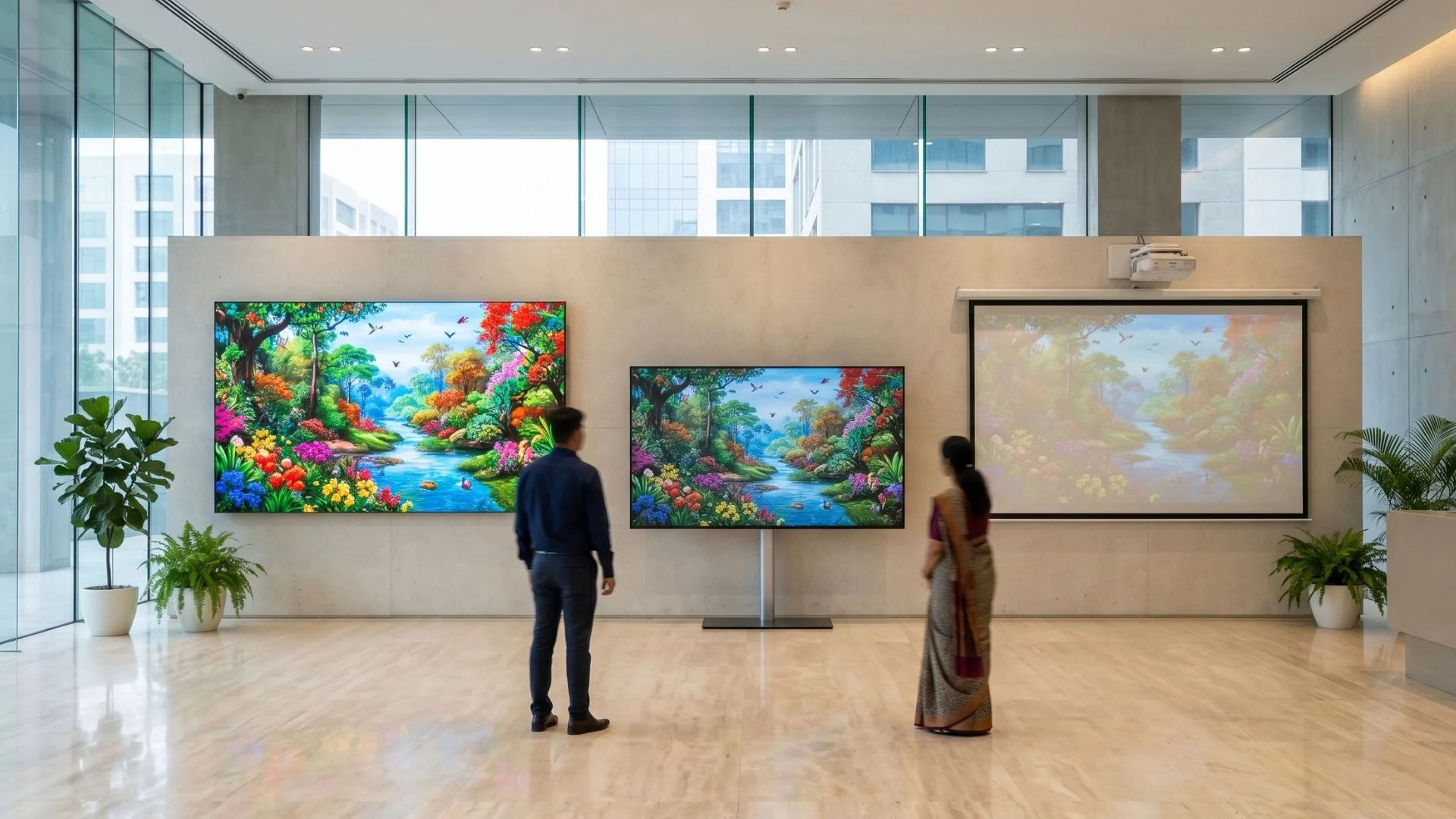
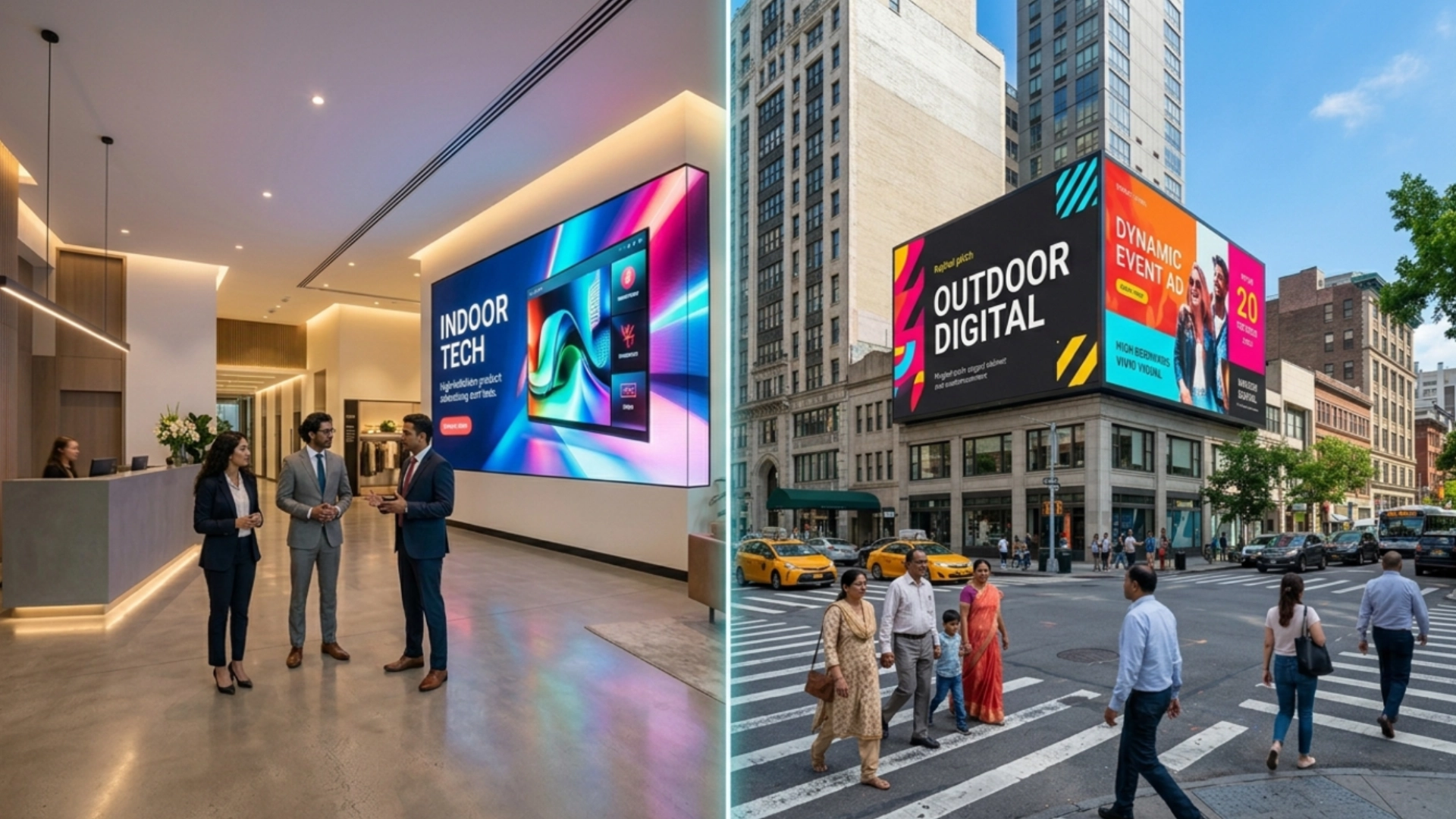
If you’re installing a display in a boardroom, retail store, or corporate office, the environment is largely controlled. There’s minimal exposure to dust and almost no risk of moisture. In such cases, going for very high protection doesn’t add much value. LED screens having ratings of IP20 or IP30 are usually sufficient.
Semi-Outdoor and High-Footfall Areas
Things change when the display is placed in spaces like shopping malls, transit areas, or semi-open environments. Here, you’re not dealing with heavy rain, but dust and occasional moisture are very real factors. This can affect display clarity and performance. Choosing an LED display with higher waterproof rating helps you avoid gradual quality issues.
Outdoor Installations
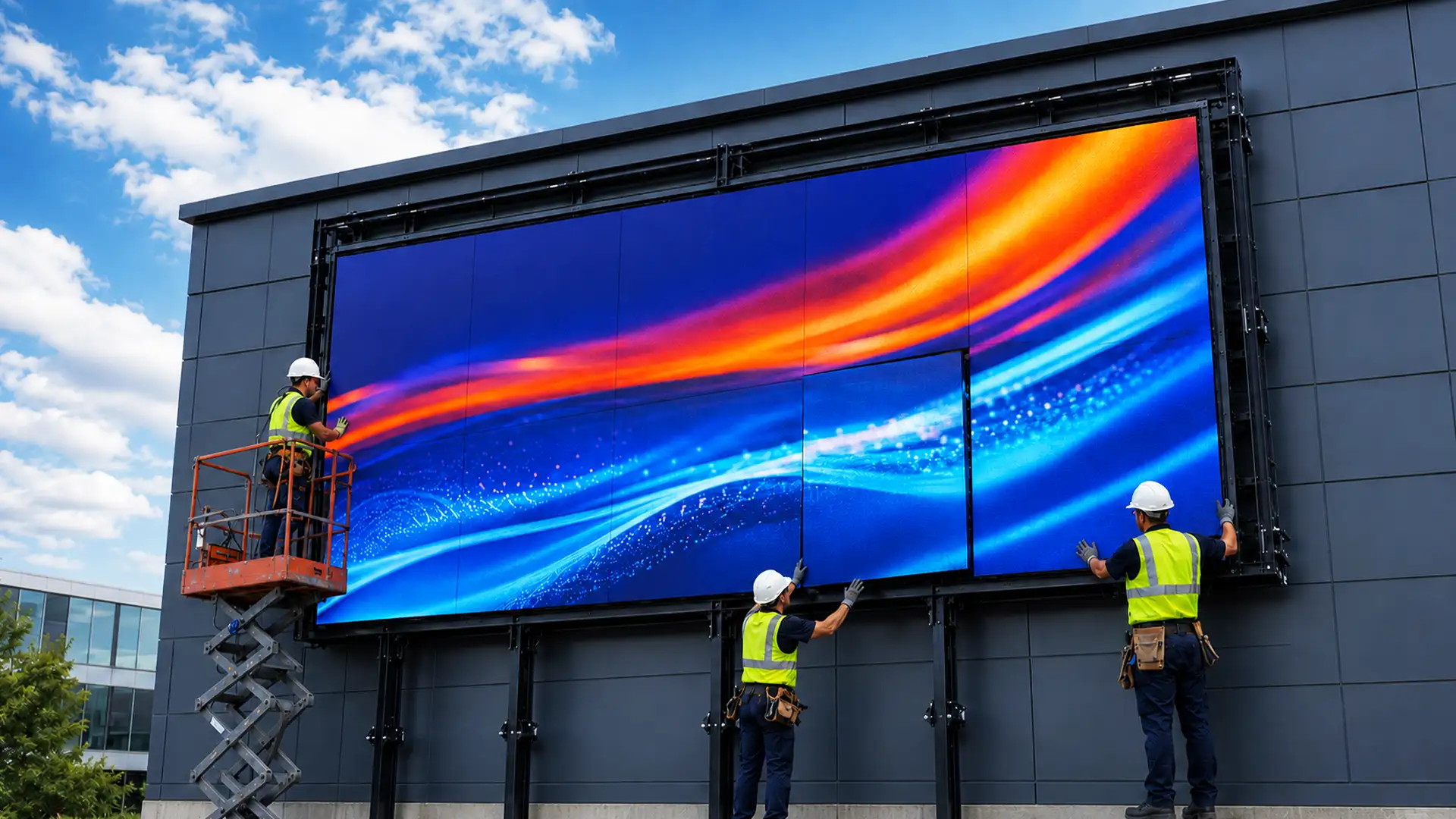
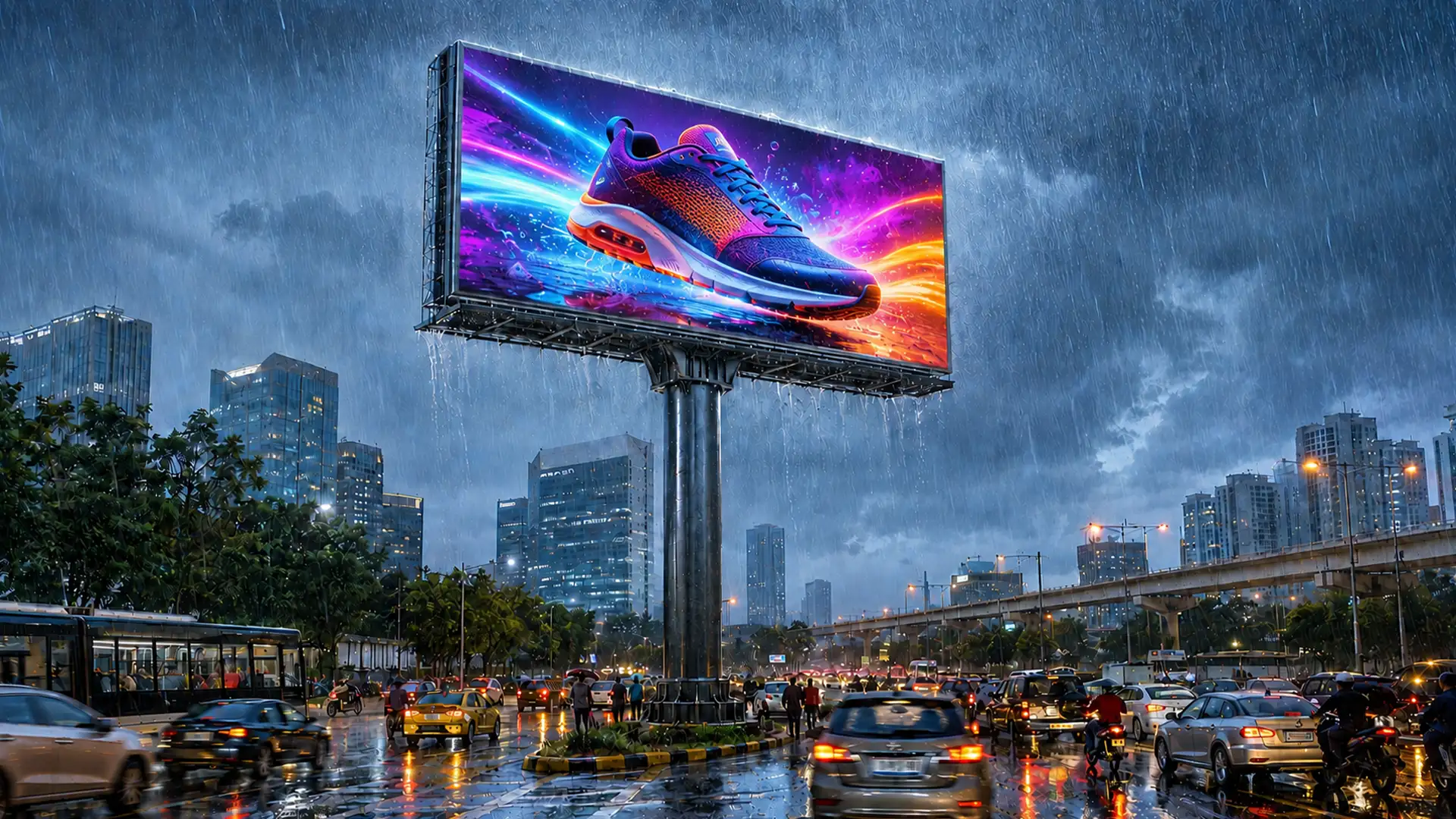
Outdoor setups are where LED display IP rating is a major concern. If you’re installing an LED display on a billboard, near a roadway, or inside a stadium, it will face constant exposure to weather and airborne particles. In these situations, screens must have higher ratings like IP65 or IP66 to keep the display running without frequent interruptions.
How Xtreme Media Sets a Benchmark for LED Display IP Ratings in Real-World LED Display Applications
At Xtreme Media, we design our LED display solutions based on where they are meant to perform. Instead of applying a uniform protection standard, we align our LED display IP ratings with actual environmental conditions.
For outdoor applications, where the screen would be exposed to dust and rain, we have the Earth Series LED displays with Front IP66 and Back IP66 protection. We also have our range of the Nyx OD Series with IP65 (front) and IP54 (rear), making it well-suited for outdoor advertising and stadium environments.
In indoor and fine-pitch display applications, the focus shifts toward maintaining visual precision. For that, we have active LED displays such as the Spectra Series, IGNIS Series, and LIT Series with Front IP60 and Back IP50 protection
Along with physical protection, we use Vigilant-IoT™ technology to monitor temperature, voltage, and pixel performance in real time.
Final Thoughts
The IP rating of an LED display is not simply just a technical specification. It determines how well a screen performs in the environment it is placed in. You need to know that selecting the appropriate IP rating LED display is not about going with higher numbers.
If you are planning an LED display installation, you can consult us to identify the right LED display IP rating based on your application.
Frequently Asked Questions
1. What IP rating should I look for in an outdoor LED display?
If the display is going outdoors, you should generally look for IP65 or higher. For harsher conditions with heavy rain or dust, going for IP66 is a safer choice.
2. Can I use a lower IP-rated LED display outdoors to save cost?
You can, but it’s not a good idea. It might work initially, but over time dust and moisture will start affecting performance, leading to repairs and higher costs.
3. Does a higher LED display IP rating always mean better performance?
Not always. A higher LED display IP rating gives more protection, but it only makes sense if your environment actually needs it. The right choice depends on where the display will be used.
4. Why do some LED displays have different front and rear IP ratings?
The front of the display is more exposed, so it usually needs higher protection. The rear side may have lower protection depending on the installation and ventilation requirements.
5. Is waterproof the same as IP-rated in LED displays?
Not exactly. “Waterproof” is a general term, while IP rating is a defined standard that specifies the exact level of protection against water and dust.
6. Do temporary or rental LED screens need high IP ratings?
It depends on usage. If the rental screens are used outdoors or moved frequently, higher IP ratings are safer. For indoor events, lower ratings may be sufficient.