How to Choose the Right LED Display for Your Business: Pixel Pitch, Size & Application Guide
Published on: May 19, 2026
Buying an LED screen is not as simple as reading a spec sheet, selecting a pixel pitch and size, and placing the order. In fact, this is where many projects stumble. While decision-makers might know what a pixel pitch is, they are unsure about how to match their spending based on the purpose and where they are installing it.
When it comes to choosing an LED display, specifications are the most important part. An incorrect pixel pitch can make content look dull and pixelated, which is why choosing the right one for the application is very important.
As an industry expert with 16+ years of experience, at Xtreme Media, we’ve seen budgets wasted on ultra-fine pixel pitches for indoor installations where such high resolution is not required. On the other hand, some brands end up using poor-quality outdoor LED signage boards that are not visible to the audience in daylight.
So, in this blog, we will share the gravity of space, your audience, content, and real-world conditions. We’ll point to clear trade-offs, practical rules of thumb, and what to ask suppliers so you purchase the right LED display.
Read on and you’ll be able to choose a display that performs where it counts, keeps costs in check, and avoids the usual traps buyers fall into:
Why Choosing the Right LED Display Becomes Complex?
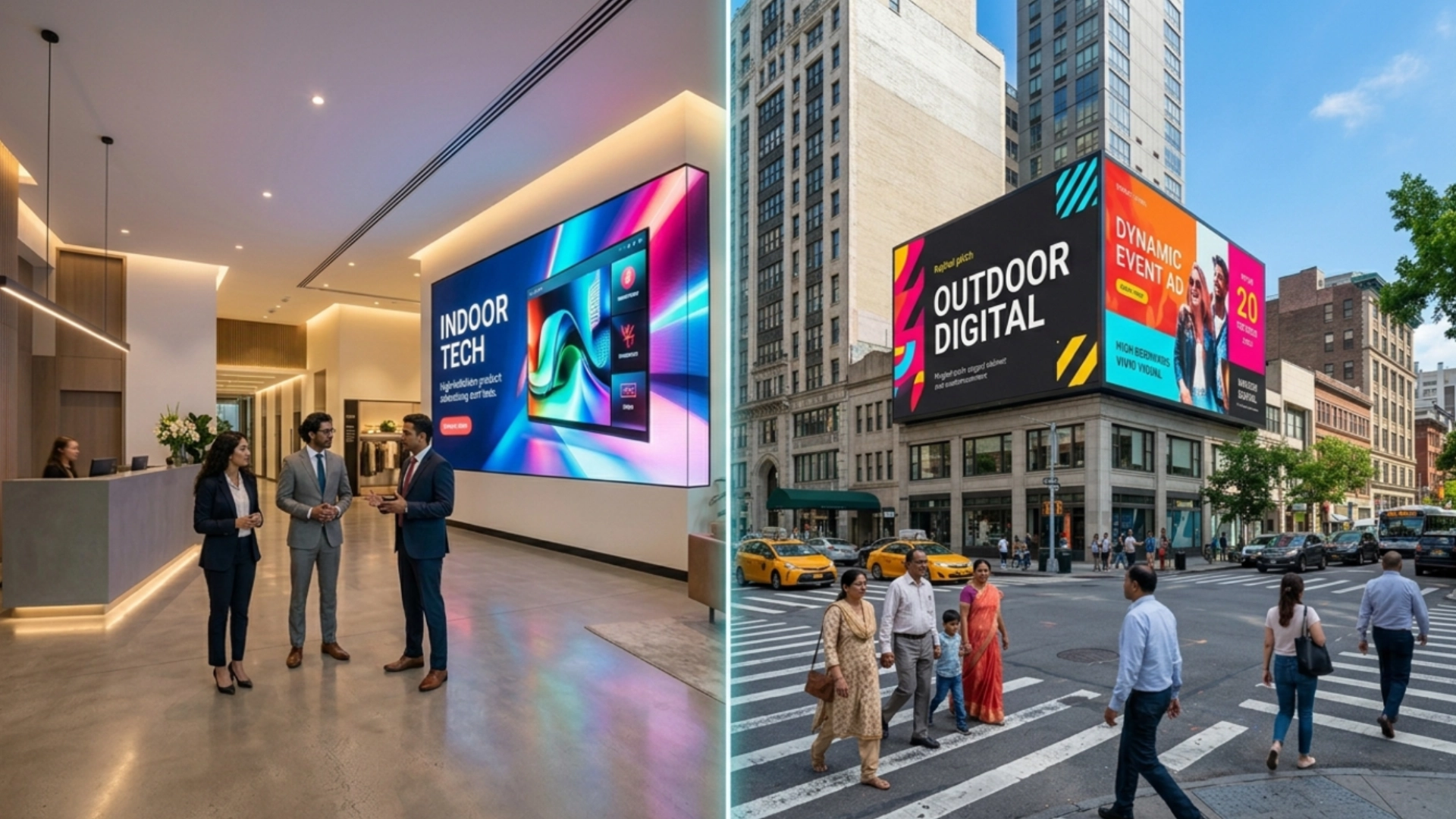
When you go through a specification sheet, it seems pretty straightforward. You choose pixel pitch, size, and brightness. But in reality, pixel pitch does not work the same in every situation. How the display looks depends on factors like viewing distance, angle, and surrounding light. That’s why indoor and outdoor installations need different brightness levels and configurations to ensure clear visibility.
For instance, a P2 wall might draw the attention of your visitors in a dim showroom. But the same wall won’t stand a chance in a sun-bathed storefront. Similarly, a P6 billboard that viewers can easily read from the road would look grainy when used as a window display.
Buyers who are not familiar with the specs might often end up choosing the wrong pixel pitch or size without matching the context. You might think, “If that brand used P3 and it looked great, we can also go for it”. But this assumption can be misleading. You need to consider factors like viewing distance, audience angles, and the installation surface—especially if it involves reflective materials like glass.
That is why brands and decision makers should choose LED Displays by context first. Know your space, audience, content, and environment. Only then should you pick the specs. This helps to avoid overspending and get measurable outcomes.
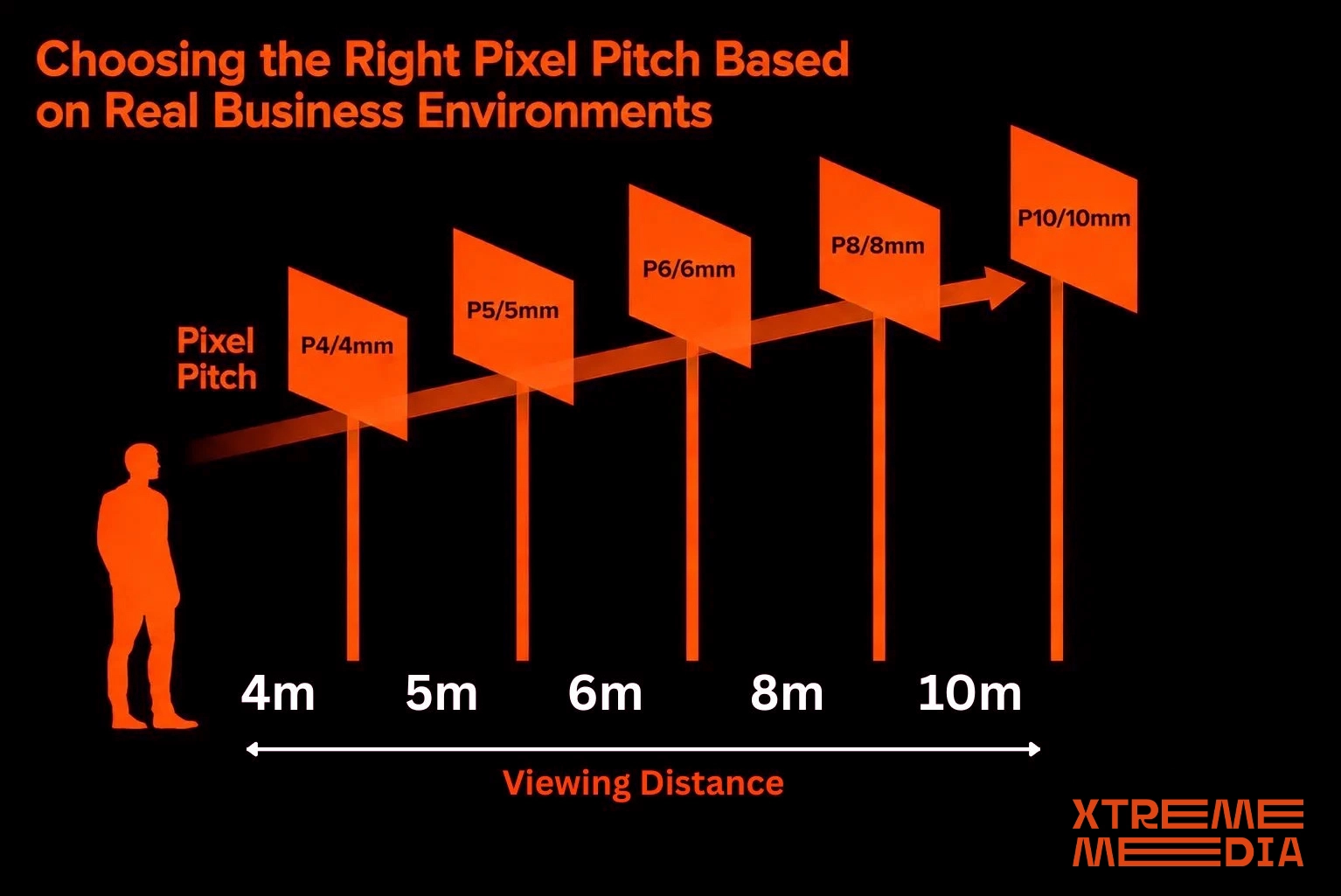
Choosing the Right Pixel Pitch Based on Real Business Environments
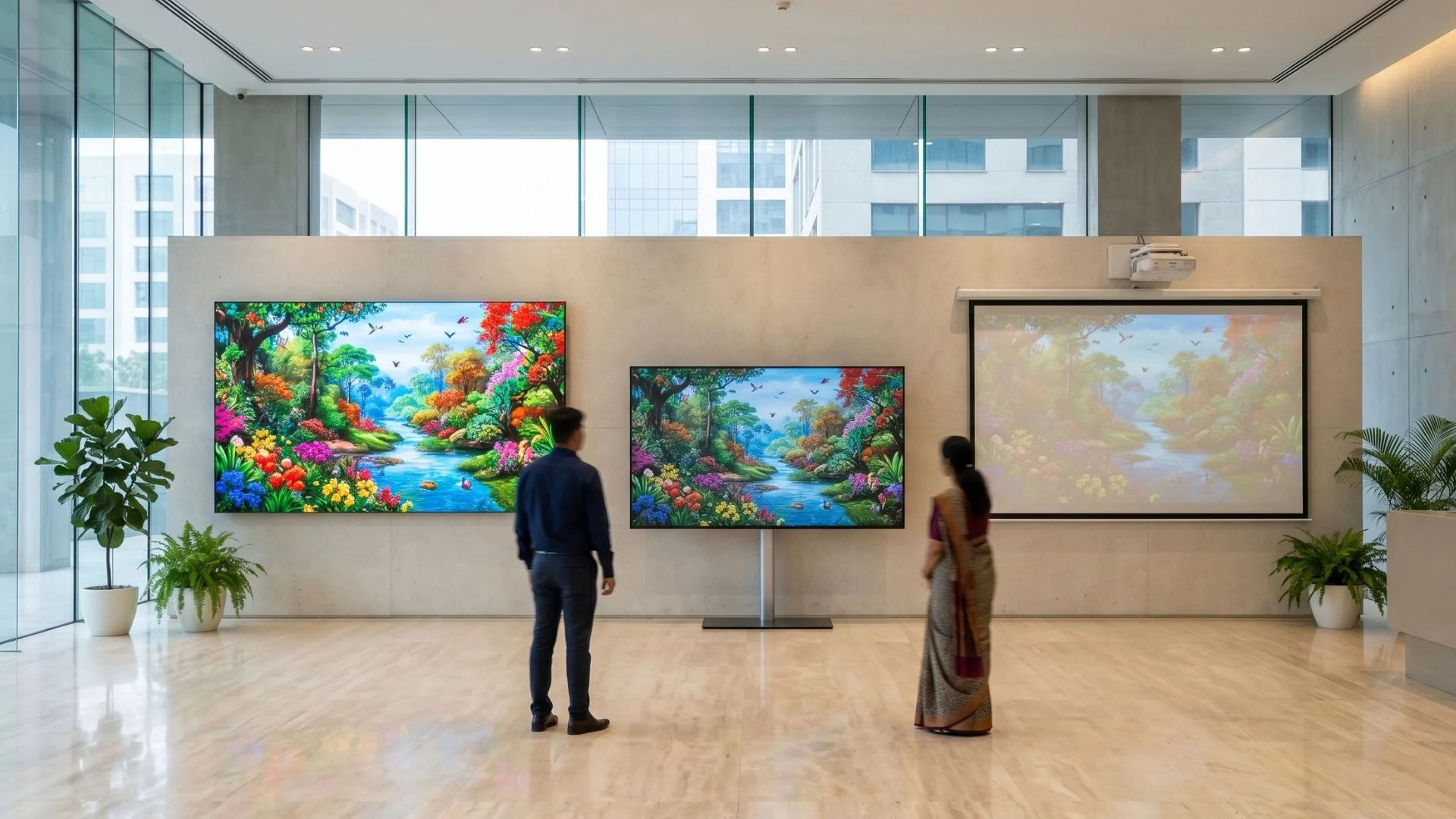
An LED screen contains millions of pixels. Pixel pitch is the distance from the center of one LED pixel to the next. It is measured in millimeters, such as P1, P2, P3, and so on. A smaller pixel pitch usually means a sharper and more detailed image. However, if people are viewing the screen from a distance, this extra detail is often not noticeable.
Why Lower Pixel Pitch Isn’t Always the Better Choice
Lower pixel pitch increases pixel density, which results in higher resolution and sharper image quality. This makes a noticeable difference when viewers are positioned close to the screen, where finer details can be clearly perceived.
However, as viewing distance increases, the ability of the human eye to distinguish these details reduces significantly. Beyond a certain point, the visual difference between a very fine pixel pitch and a standard one becomes minimal, even though the cost difference remains substantial.
This creates a common mismatch in LED display selection. Buyers often choose lower pixel pitches expecting superior performance, without evaluating whether the installation environment actually demands that level of detail.
Choosing Pixel Pitch Based on Viewing Distance and Audience Behavior
Before you decide on pixel pitch, create a thorough plan. The first and most practical step is to decide how close viewers will go to the screen. For indoor LED displays in the showroom or meeting room, people actually stop to read the content. Hence, using finer pitches in these places makes more sense. For outdoor LED screens on large venues, a coarser pitch works fine.
At Xtreme Media, we recommend you measure the closest practical viewing point and the typical dwell time. For example, do people glance for two seconds or read blocks of text? This will help us guide you as well.
How Environment Affects Pixel Pitch Performance
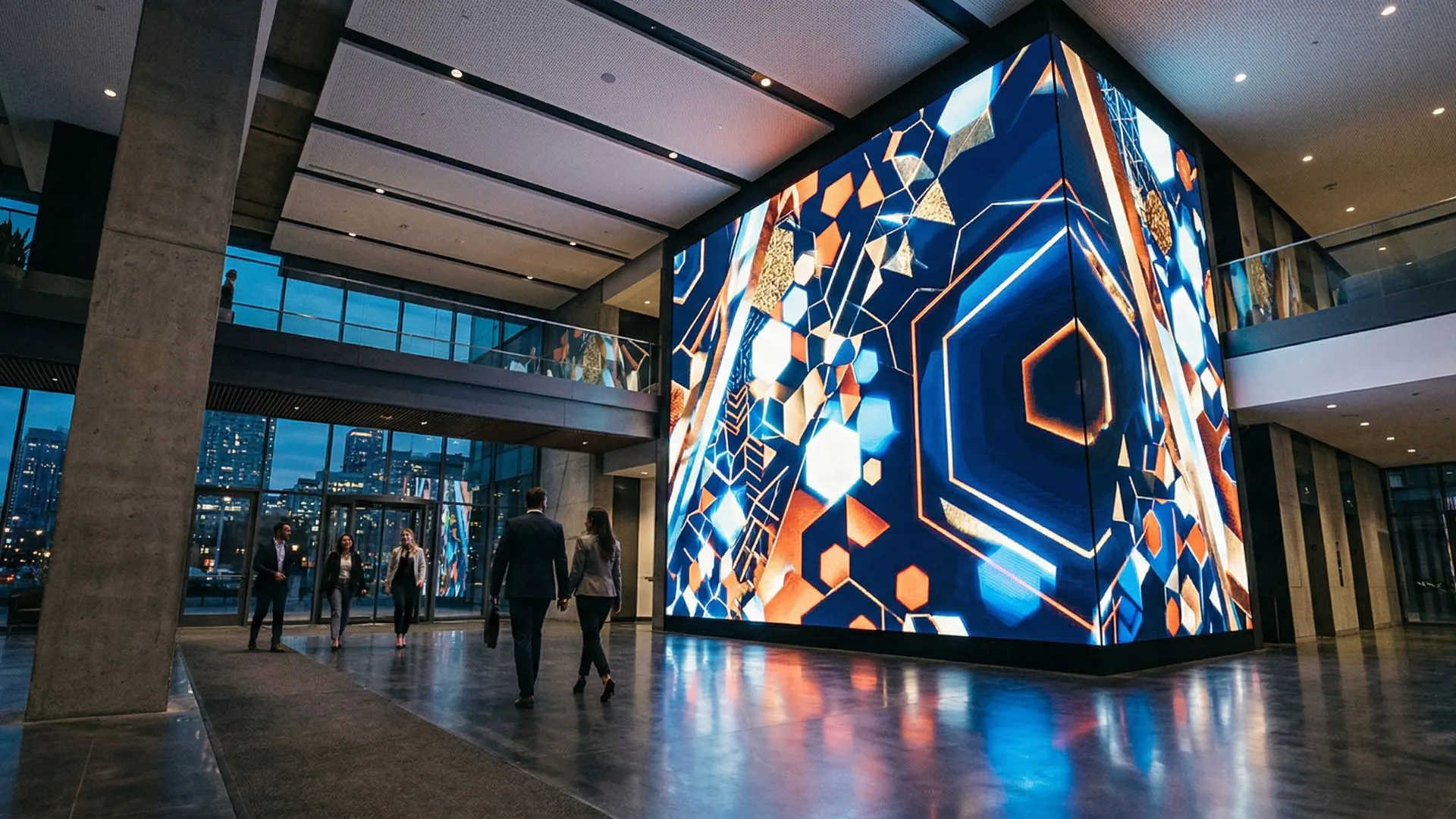
Just as we mentioned earlier, lighting is a major modifier. For indoor LED screens, the lighting is more controlled. Since indoor screens are viewed from close range, a finer pixel pitch makes the visuals look clearer and more detailed.
For outdoor LED display screens or transparent LED displays, sunlight and reflection can influence how the content appears on the screen. The viewing angle can also influence screen performance.
Lastly, if you are planning for long-term use, it is better to choose a screen that can be adapted to different environments. This allows you to relocate it from a facade to a lobby or other spaces as per your requirement.
Selecting LED Screen Size and Dimensions for Brands
Many businesses often prefer to go big when it comes to LED screens. But size isn’t just about fitting the wall. You need to consider the visual comfort of your audience.
Why Bigger LED Screens Don’t Always Create Better Impact
Larger LED screens are more visible from a distance, which makes them more effective at gaining attention. However, it can influence audience impact if the content isn’t scaled for the format. For large displays, brands go for lower pixel density. Because if you want higher resolution, the costs increase considerably.
Plus, oversized signage can lead to visual fatigue. Large screens often require stronger mounting infrastructure and a larger maintenance budget. That doesn’t mean you should not go for a bigger screen. They leave a strong impact when you use the right content.
Matching Screen Size with Content Type
Brands need to understand what kind of content they want to show on the LED screen. If the content is more text-heavy, the content management team needs to prioritize sizing so letters stay legible at typical viewing distances.
Video-first branding, on the other hand, looks more immersive on larger canvases. However, you should confirm whether the pitch supports the visual detail you want. For informational content like timetables or dynamic pricing, clarity is top priority. Hence, choosing a smaller, sharper display rather than a huge, low-resolution one might sometimes be more useful.
Aspect Ratio and Layout Considerations
When using LED Screens, brands shouldn’t just stay stuck on using the standard landscape. Portrait screens work well for tall shop windows, while corridors are better suited for long, narrow LED displays that fit the space and remain easy to view. We offer customizable LED screens for both indoor and outdoor installation.
Some brands opt for custom aspect ratios, but this requires content to be specifically designed to match the screen dimensions and avoid distortion or wasted space. Consider whether your CMS will support non-standard resolutions. Brands should also consider modularity. If a screen built from standard cabinets is easier to extend or repair.
Sometimes the content ratio and aspect ratio don't match, and the visual ends up looking stretched with awkward letterboxing.
Choosing the Right LED Display Based on Application
Each location has its own priorities. Here are a few scenarios:
LED Displays for Retail Stores and Showrooms
Environment
The screens are installed indoors in controlled lighting; however, there might be reflective surfaces.
Audience
Close viewers, shoppers who walk around and check products.
Spec priorities
Using LED screens with fine pixel pitch keeps product shots crisp and readable. The screen should have accurate colour reproduction with controlled brightness to avoid glare. Ventilation and heat management are important if the screen runs bright for long periods.
Common mistake
Brands often end up overspending on extreme pixel density without matching content. Many stores order ultra-fine pitches and run simple promos and static images. These types of content don’t need the extra resolution. So, it’s better to choose a pixel pitch that serves the closest expected viewing distance and invest the saved budget in better content and a CMS.
LED Screens for Shopping Malls and Large Commercial Spaces
Environment
Mixed lighting conditions, large volumes, multiple sightlines, and long operating hours.
Audience
People sometimes stop and watch while many passes by quickly. Therefore, dwell times vary widely.
Spec priorities
We suggest choosing a balanced pitch that reads well at mid-range distances. An LED screen with strong viewing angles and high contrast stands out across the hall. Pay special attention to brightness for comfortable long exposure. Since these displays run for a long time, brightness degradation often becomes an issue.
Common mistake:
Many brands don’t think enough about whether people can actually read what’s on the screen. In malls, designers often believe that moving graphics will make the content clearer. But it can’t be fixed if the contrast is bad or texts are too small. If you want to avoid this, make sure fonts are clear with a strong contrast between text and background.
LED Displays for Glass Windows and Facades
Environment
Direct or indirect daylight, reflections, and transparency requirements.
Audience:
Passers-by, so the distance varies.
Spec priorities:
Brands need to prioritize high peak brightness and anti-glare strategies when installing LED screens on glass windows or facades. In such applications, colour and contrast matter more than pixel density. For setups that need visibility from both inside and outside, our transparent Crystal Series, provide clear visuals without blocking your field of view.
Common mistake:
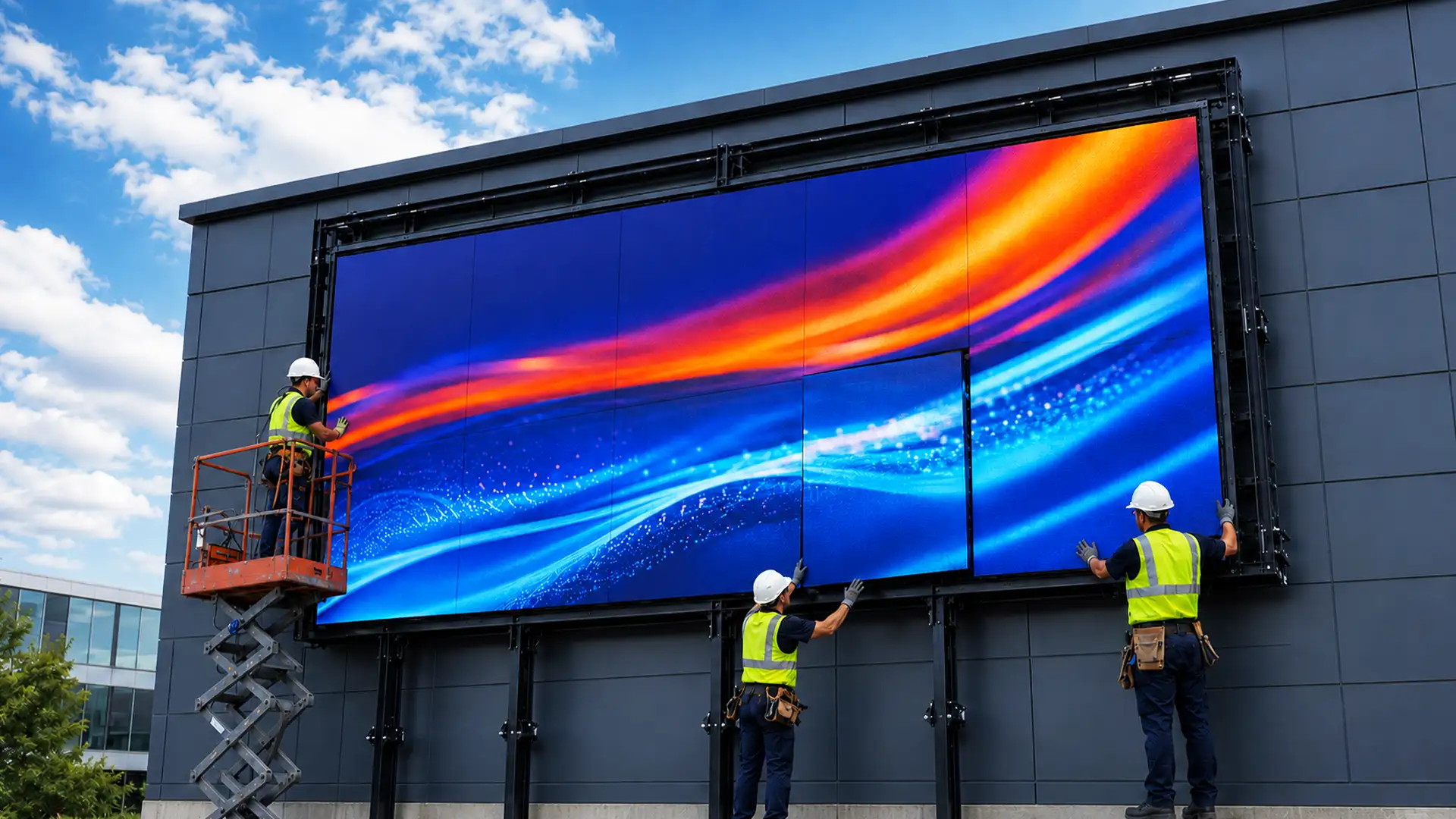
Brightness is essential, but it alone is not enough. Pushing nits without addressing reflection, viewing angle, and content readability makes the screen bright but unreadable. It is essential to balance peak brightness with optical treatments, content choices, and mounting position. For façade installation, it is better to consult with structural engineers since mounting, wind load, and access for maintenance can influence the screen efficiency and productivity.
LED Screens for Events and Temporary Installations
Environment
This can vary both indoors and outdoors.
Audience:
Often dense, with viewers at many distances and angles.
Spec priorities:
The LED screens should have modular panels for quick and easy installation. Having flexible pixel pitch options depending on stage proximity is also crucial for a better audience experience.
Common mistake:
A common mistake which most brands make is choosing fixed-install LED displays for event or rental use due to their lower upfront cost.
These systems are not designed for repeated installation and removal, which results in longer setup times, higher labour effort, and reduced operational efficiency.
Modular, touring-grade cabinets are designed for frequent deployment. They minimise installation time, withstand repeated handling, and help reduce operational downtime.
Final Thoughts
When it comes to LED displays, there is no single “best” option. For most cases, the right choice depends on your audience, content, and environment. So, before making any final decision, first understand your space and audience. Map your content needs, choose the right pixel pitch, and the right screen size.
If you’d like, we can run a quick site checklist for your location, map the right pixel pitch and size options, and draft a short spec and budget brief that you can share with stakeholders.
FAQs
Q.1. What is the ideal pixel pitch?
The right pixel pitch usually depends on viewing distance, audience behavior, lighting conditions, and content type.
Q.2. What is the pixel pitch in an LED screen?
Pixel pitch is the distance in millimeters between the centers of two pixels. Lower pitch shows finer detail at close range; higher pitch works for distant viewing.
Q.3. What is the size of LED screens?
LED screens come in many sizes, from small indoor boards to large outdoor façades. Size is chosen based on space, viewing distance, and content needs.
Q.4. What is the best size of LED?
There’s no “best” size. Pick a size that matches audience distance, visual comfort, and content legibility. Bigger isn’t always better if text becomes unreadable.
Q.5. What are the applications of LED displays?
LED displays are used in retail, malls, events, façades, showrooms, outdoor advertising, corporate spaces, and temporary installations for branding, information, and engagement.
Q.6. Can I connect an LED screen to a computer?
Yes. LED screens can connect to a computer through controllers or media players for content playback and management.