Flexible & Curved LED Screens: How Businesses Can Use Them for High-Impact Installations
Published on: February 25, 2026
Visit any corporate office, retail store, event, or airport, and you will see digital displays used for marketing. In some places, the screens are flat, while in other venues, they are curved or in different shapes. At present, flexible and curved LED screens are becoming more popular. These LED video walls have changed how brands use digital displays to attract attention, enhance visitor experience, and communicate.
If you manage digital signage, retail stores, exhibitions, DOOH networks, or commercial real estate, curved LED solutions can expand how you engage with your audience. As one of India’s largest active LED display brands, this guide by Xtreme Media will help you understand how flexible and curved LED displays can support your goals.
What Are Flexible and Curved LED Screens?
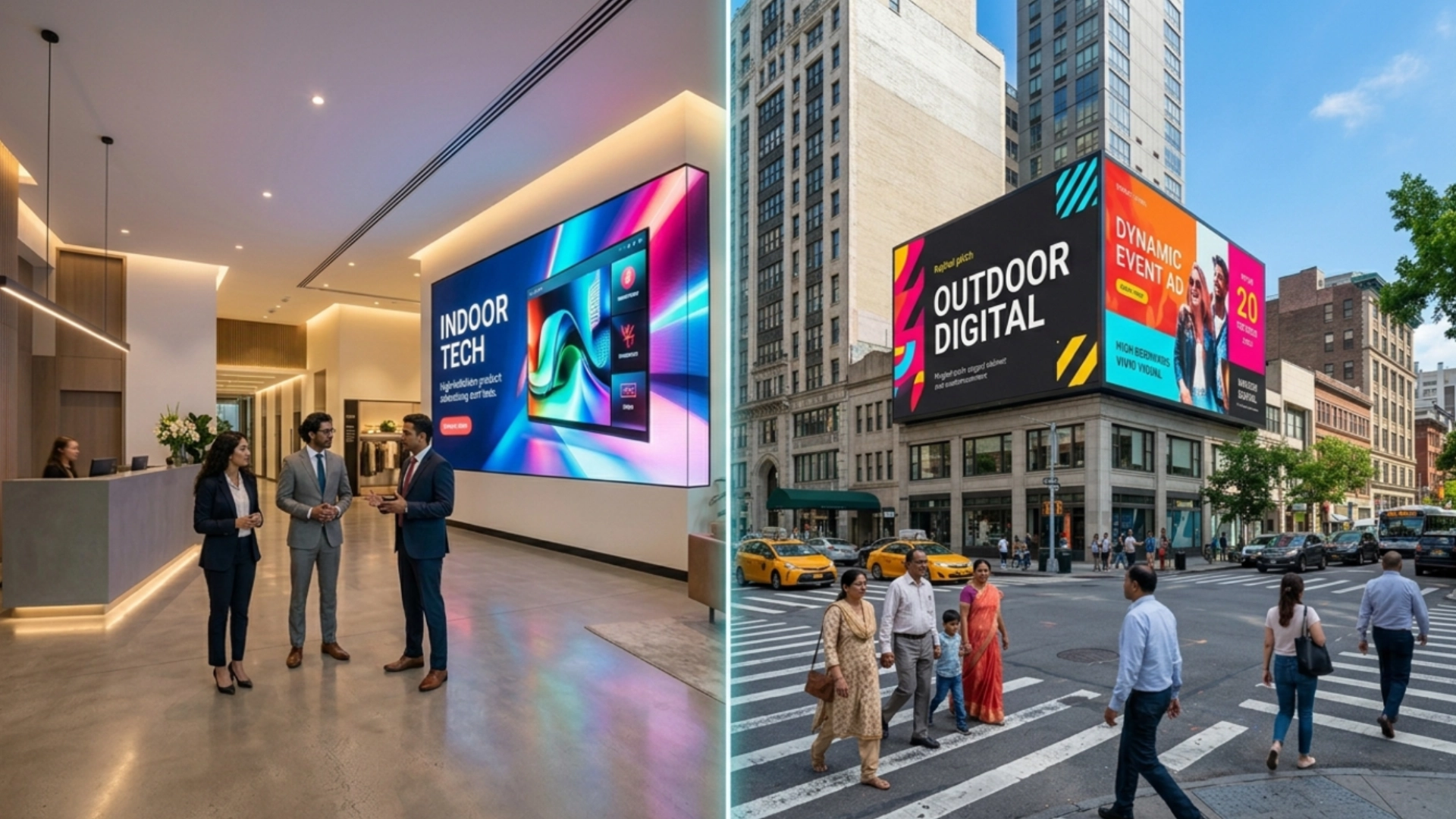
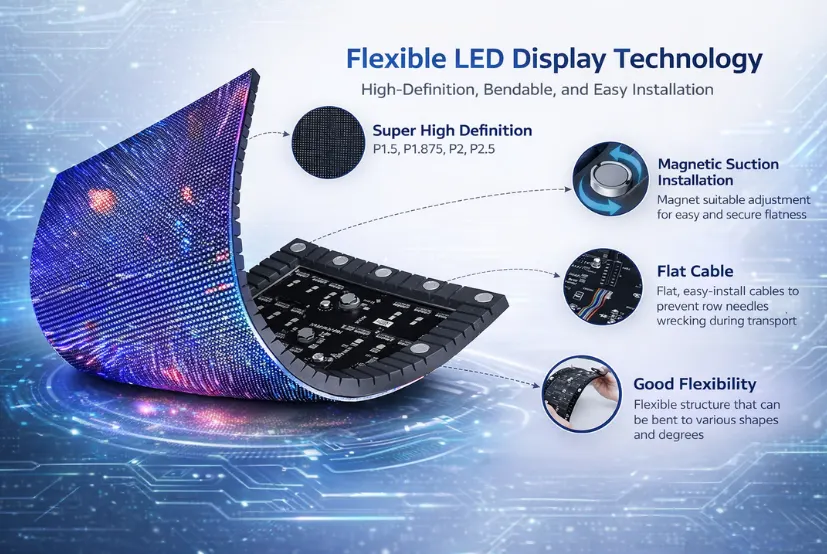
LED screens are installed both indoors and outdoors. Flexible and curved active LEDs usually have modular construction but use soft PCBs, magnetic modules, and thinner cabinet designs. This allows manufacturers to bend the screen around pillars, wrap it around corners, form cylinders, or shape it into other forms without visible seams. We can categorize the formats into:
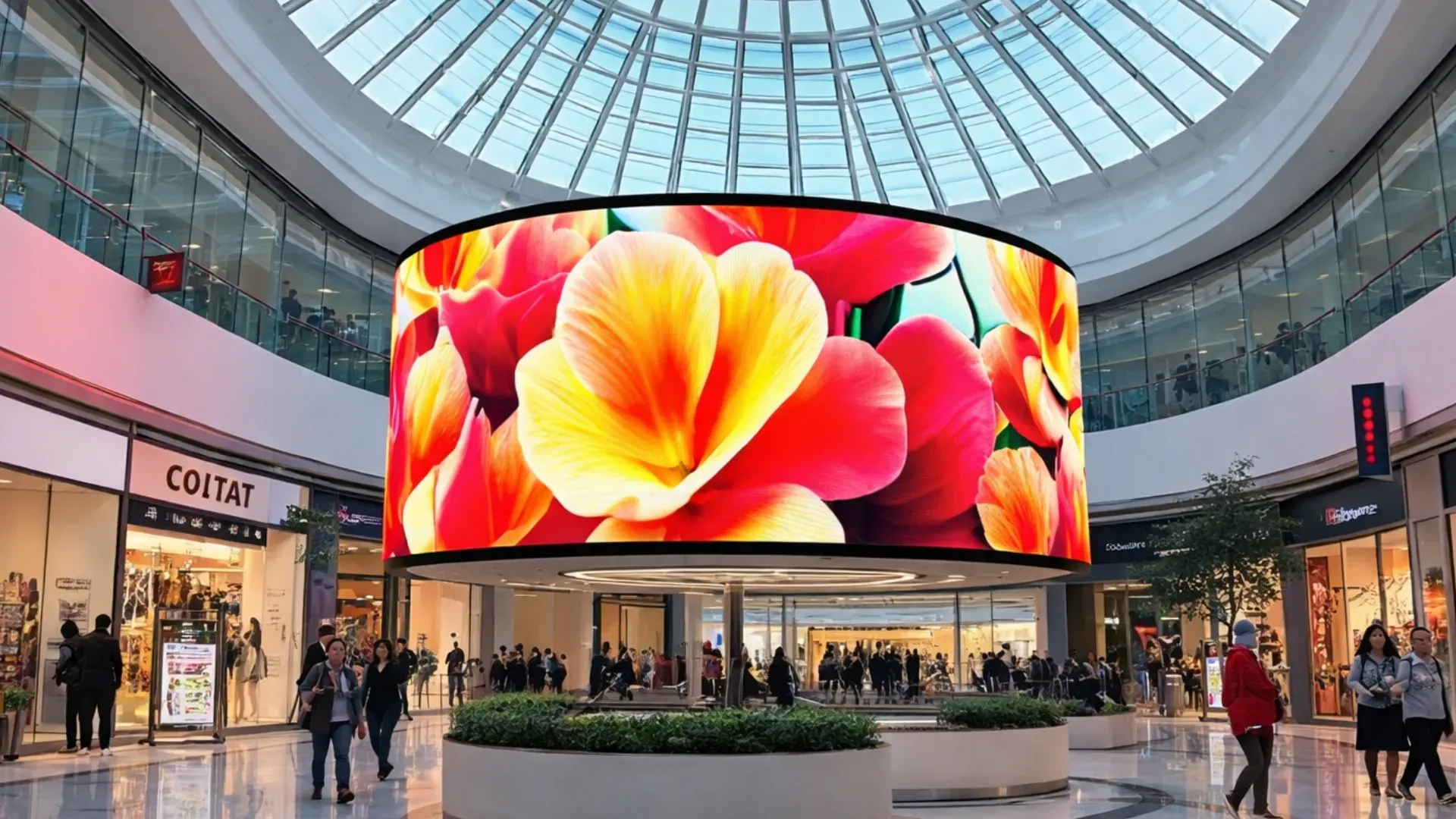
- Curved LED Screens: Here, the screens are bent and seamlessly integrated around a specific radius.
- Flexible LED Modules: These modules are highly bendable, allowing tighter curves and non-traditional shapes.
Where These Screens Are Commonly Installed
Flexible and curved active LEDs appear across multiple sectors, including retail, airports, events, entertainment, museums, and so on.
Let’s take a closer look:
| Sector / Venue Type | Typical Installation Formats | Business Purpose |
|---|---|---|
| Retail & Malls | Storefronts, atrium wraps, column active LEDs, display walls | Footfall engagement, product storytelling, visual merchandising |
| Airports & Transit | Duty-free zones, lounges, wayfinding blends, experiential zones, outdoor active LEDs | DOOH monetization, passenger experience, premium branding |
| Events & Exhibitions | Cylinders, arches, tunnels, stage backdrops, sculptural active LEDs | Booth differentiation, immersive activations, reusable rentals |
| Hospitality & Entertainment | Lobby art walls, nightlife zones, resort pods | Atmospherics, luxury positioning, experience-first design |
| Museums & Cultural | Domes, immersive theatres, interactive timelines | Education + immersion, experiential exhibits |
| Corporate HQs | Executive lobby walls, brand narrative displays, data walls | Visitor impression, brand reputation, digital architecture |
Why Businesses Use Curved & Flexible LED Displays
The primary objective of custom LED screens, like curved or flexible ones, is to increase engagement. These screens deliver:
More Visual Impact in High-Footfall Environments
When brands use curved LED displays in a high-footfall environment, it draws viewers from multiple angles. Especially in malls, airports, or exhibitions, the surface geometry increases dwell time and improves brand recall. It is not just about aesthetics. The screen makes motion graphics look more eye-catching.
Architectural Freedom & Spatial Efficiency
Modern or conventional buildings don’t usually have the perfect rectangular layout. There are always columns, curvature, or irregular surfaces, depending on the structure. Traditional LED screens might not fit in these places. Xtreme Media’s Iris Media Façade Series, for instance, can be customized to install in any building or infrastructure.
Standing Out in Retail
Nowadays, retail brands are not just competing with other stores but also with online shopping. Retail stores need to step up their game and give customers a reason to walk in. Curved LED screens are perfect for creating excitement and curiosity. Xtreme Media's indoor LED display screens: Flex series help brands to have a dynamic and premium environment. These screens are available in both concave and convex shapes.
Engineering & Installation Factors Businesses Should Know
Before installing flexible and curved LED screens for your business space, here are a few things to consider:
Pixel Pitch and Viewing Distance
If you are installing a curved LED display close to the ground, people may come close to it and even touch it, especially in cylindrical, tunnel, or wrap-around formats. Therefore, it becomes important to choose the right pixel pitch.
For indoor environments such as malls, stores, hospitality spaces, and events, the standard requirement for finer pixel pitches is often below 2.5mm. This way, you can make sure the content looks sharp even up close. For outdoor curved façades and DOOH pillars, you can use larger pixel pitches since people usually watch them from farther distances.
Mounting Hardware & Structural Loads
When teams install a flat LED screen, they can fix each cabinet directly onto trusses or walls because the panels are rigid. But with flexible or curved LED screens, the mounts have to spread the load along the curve. This prevents stress on any single point and keeps the bend smooth and stable.
When hanging the LED screen from above or placing it in public venues like airports and exhibition halls, load distribution and safety certification become even more important. Therefore, it is essential to make sure the installation team is familiar with the strict compliance standards as large crowds move underneath the structure.
Maintenance Access & Module Servicing
Whether it is a curved LED screen or a flat display, maintenance and servicing are non-negotiable. For most curved indoor installations nowadays, manufacturers use front-service modules. The back of the screen often sits against architectural structures. This way, it becomes much easier and faster to replace individual modules without the need to dismantle the entire display. For rental operators and commercial buyers, this reduces downtime.
Challenges That Come with These LED Screens and Their Solutions
If you consider design and creative freedom, then flexible and curved LED displays offer more advantages than traditional flat video walls. However, they also come with some practical challenges during design, installation, and operation.
Here are a few common challenges and their solutions:
Content Distortion & Visual Geometry
Curved screens change how content appears. You need to make sure the content team is using 3d tools, templates, and pre-visualization software that mimic the curve. Many content creators use real-time rendering engines such as Unreal Engine or Notch to adjust.
Tight Radius & Installation Complexity
Precision is crucial when dealing with spherical, cylindrical, and ribbon-shaped LED setups. The modules need to be connected at the right angle and radius to maintain a smooth curve. If the radius is too tight or the panels are misaligned, small gaps or stepping can appear.
As a consequence, the image loses its continuity and doesn’t look appealing. Besides, mechanical drawings, mounting hardware, and rigging teams must coordinate with each other to deliver the best visual experience to their audience.
For the rental LED screen industry, modules are always getting assembled, disassembled, transported, and reused across multiple shows. Hence, the module tolerances need to remain consistent every time for proper alignment.
Higher Upfront Investment
If you are purchasing curved and flexible LED systems, the upfront cost is usually higher than standard flat video walls. Because these custom LED displays need:
- Finer pixel pitches,
- Custom cabinet designs,
- Magnetic mounting, and
- Specialized enclosures.
However, the price is justified depending on its usage. For instance, in retail and DOOH environments, curved displays can attract more attention, create premium ad inventory, and improve brand perception. In the long term, this helps companies achieve better return on investment.
Calibration, Uniformity & Seam Integrity
Calibration is more noticeable on curved displays. If there is any inconsistency in brightness, color, or seam alignment, the audience can tell it. On flat screens, these slight variations blend more easily across the surface.
However, when you choose a reliable manufacturer, they address this through LED binning, module-level correction, and factory calibration software. And with periodic maintenance, businesses preserve color uniformity and brightness consistency, even when operating for long hours in commercial environments.
Final Thoughts
Flexible and curved LED screens have a high potential across different industries. The content looks more engaging and sharper than a flat screen because of how it interacts with the viewer’s field of vision. However, if you want to deliver a more immersive experience to your customers in the long term, curved LED Screens offer a higher impact.
FAQs
Is an LED screen a TV?
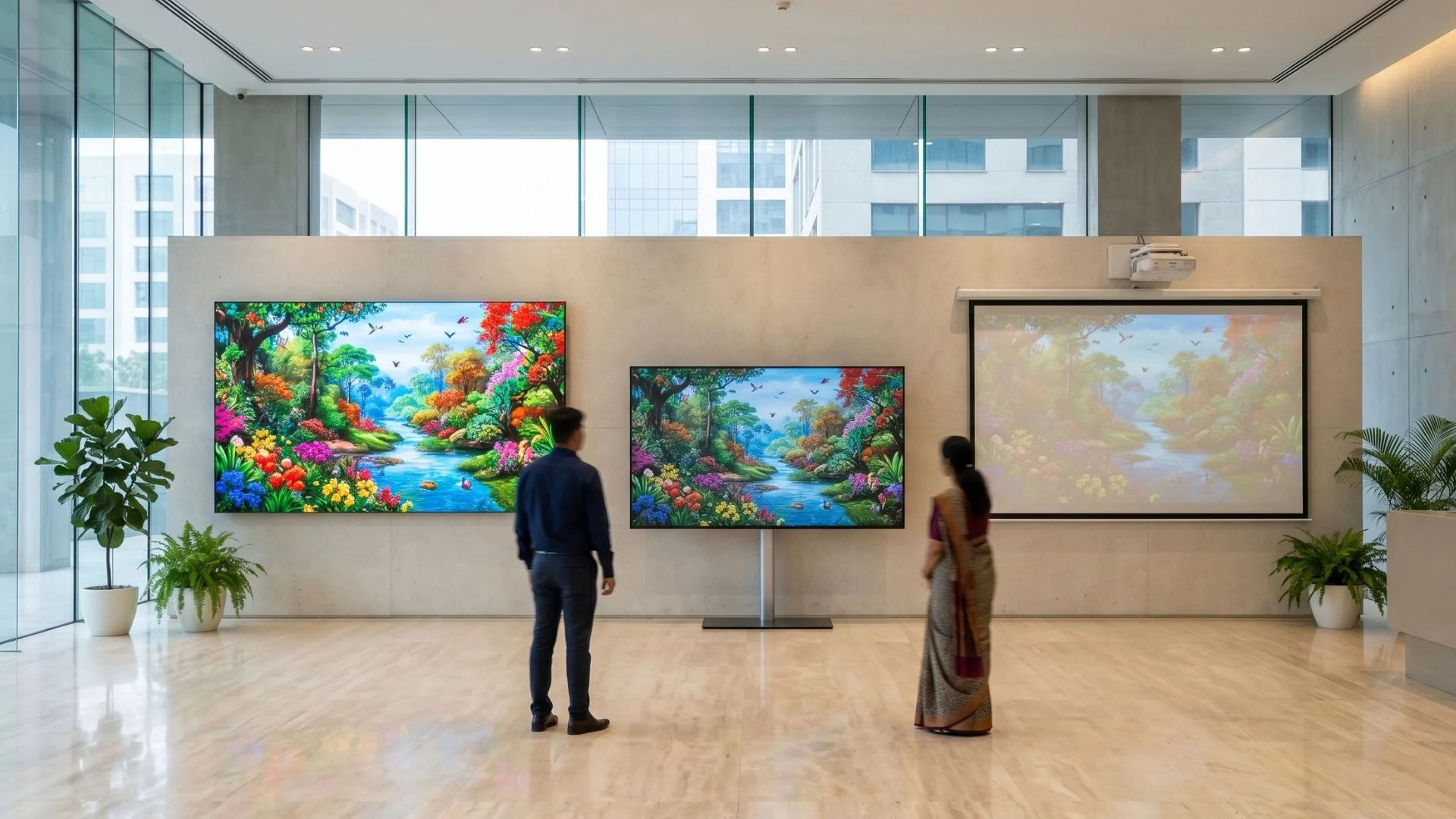
An LED display is not the same as a TV. It is built for modular indoor or outdoor installations, larger formats, and custom shapes rather than what we watch at home.
How to assemble an LED display?
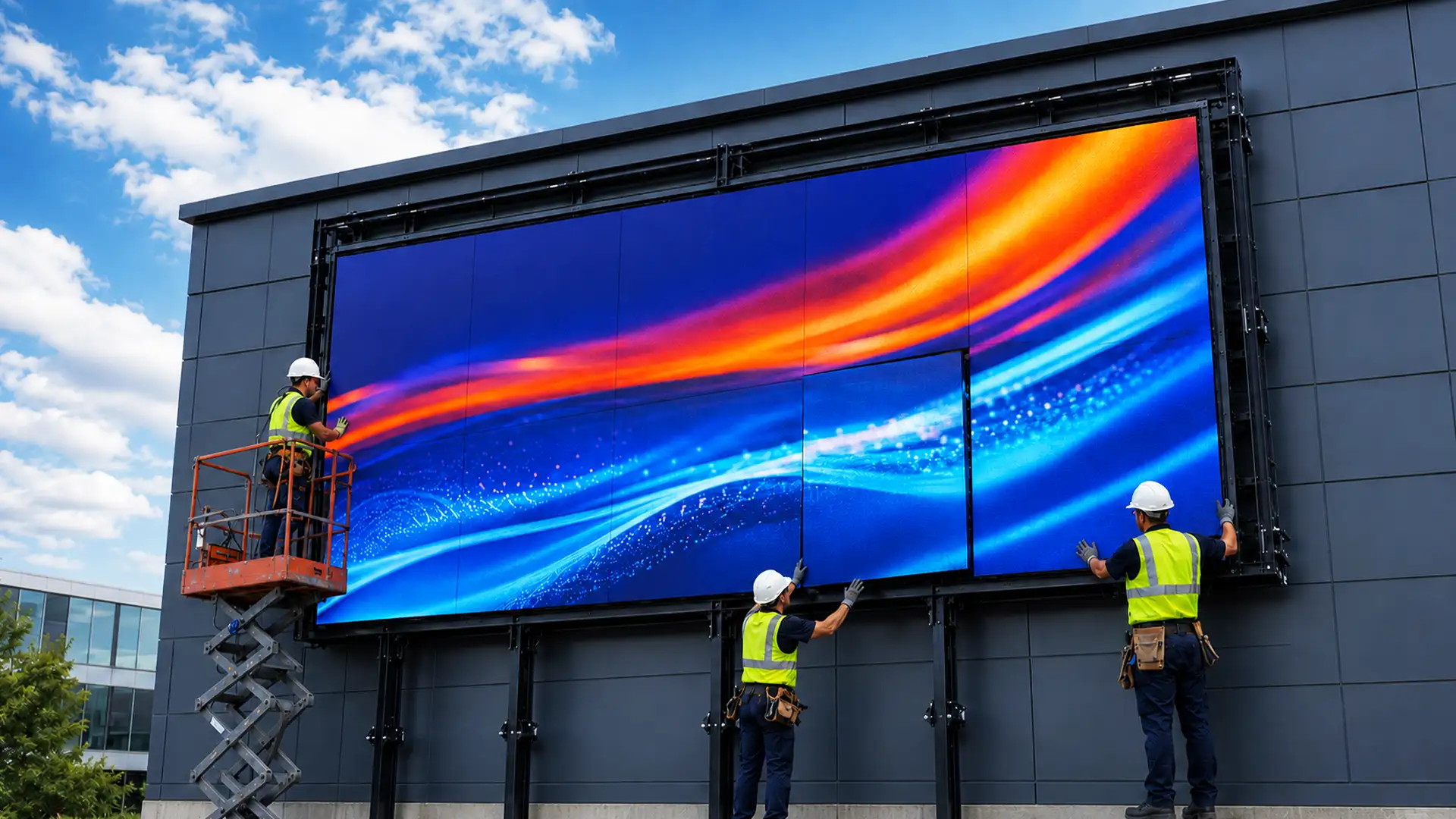
Technicians link LED modules, connect cabinets, attach power and data systems, calibrate brightness and color, and run structural checks before playing content.
How to hang an LED panel?
At exhibitions, panels hang from trusses or ceiling mounts using certified rigging systems that distribute weight evenly and meet venue safety and compliance standards.
What is the advantage of a curved display?
Curved LED displays catch attention from wider angles, enhance immersion, improve dwell time, and let brands use architectural spaces that flat screens cannot cover well.
Which is better: curved or flat display?
Flat displays cost less and fit standard layouts. Curved displays help storytelling and experience design, so they work better where engagement and ambience matter. However, both are used for different sets of applications and client requirements.
Is a curved display risky?
Not when installed correctly. Curved screens require proper mounting, compliance checks, and radius guidelines to prevent stress, sagging, or gaps between the cabinets over time.